
Written by Jennifer Lyons on December 22, 2025
Reviewed by Jessica Rapp, Edited by Suzanne De Vita
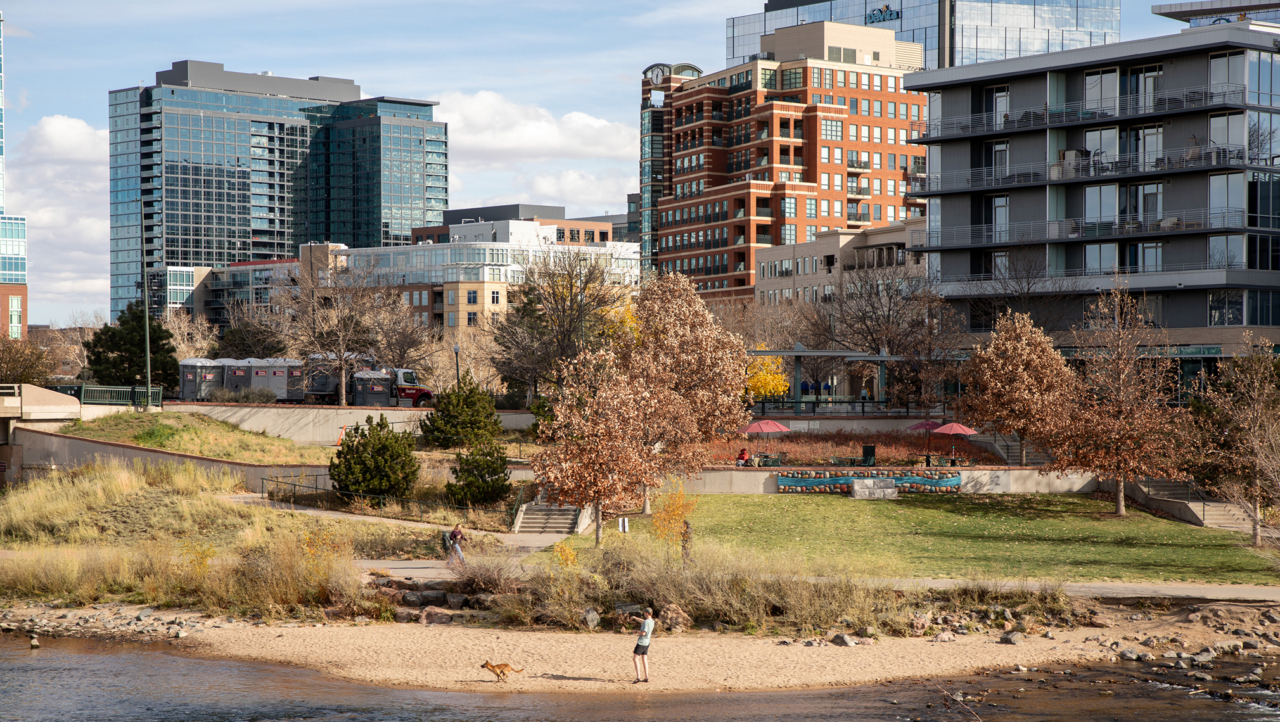
Denver’s got it all: Rocky Mountain access, a booming food and arts scene and a growing tech and professional job market. Here, there’s a neighborhood for almost any buyer or renter, from the more affordable and quieter areas of Denver, like Capitol Hill and Harvey Park, to the cultural spots of RiNo for breweries and LoDo for nightlife.
We’re highlighting some of Denver’s top neighborhoods across five categories, with quick takeaways and need-to-knows as you consider where to settle in The Mile High City.
Check out the best neighborhoods in Denver for:
- Affordability and value
- Lifestyle and community
- Luxury and high-end living
- Schools and higher education
- Quiet living
For affordability and value
Denver’s median list price is about $550,000 as of October 2025, well above the U.S. median of approximately $406,000. However, there are still some affordable neighborhoods within the city. From centrally located condos in Capitol Hill to more budget-friendly single-family options in Harvey Park and Ruby Hill, these areas balance lower price points with access to transit, green space, restaurants, and major job centers.
Capitol Hill
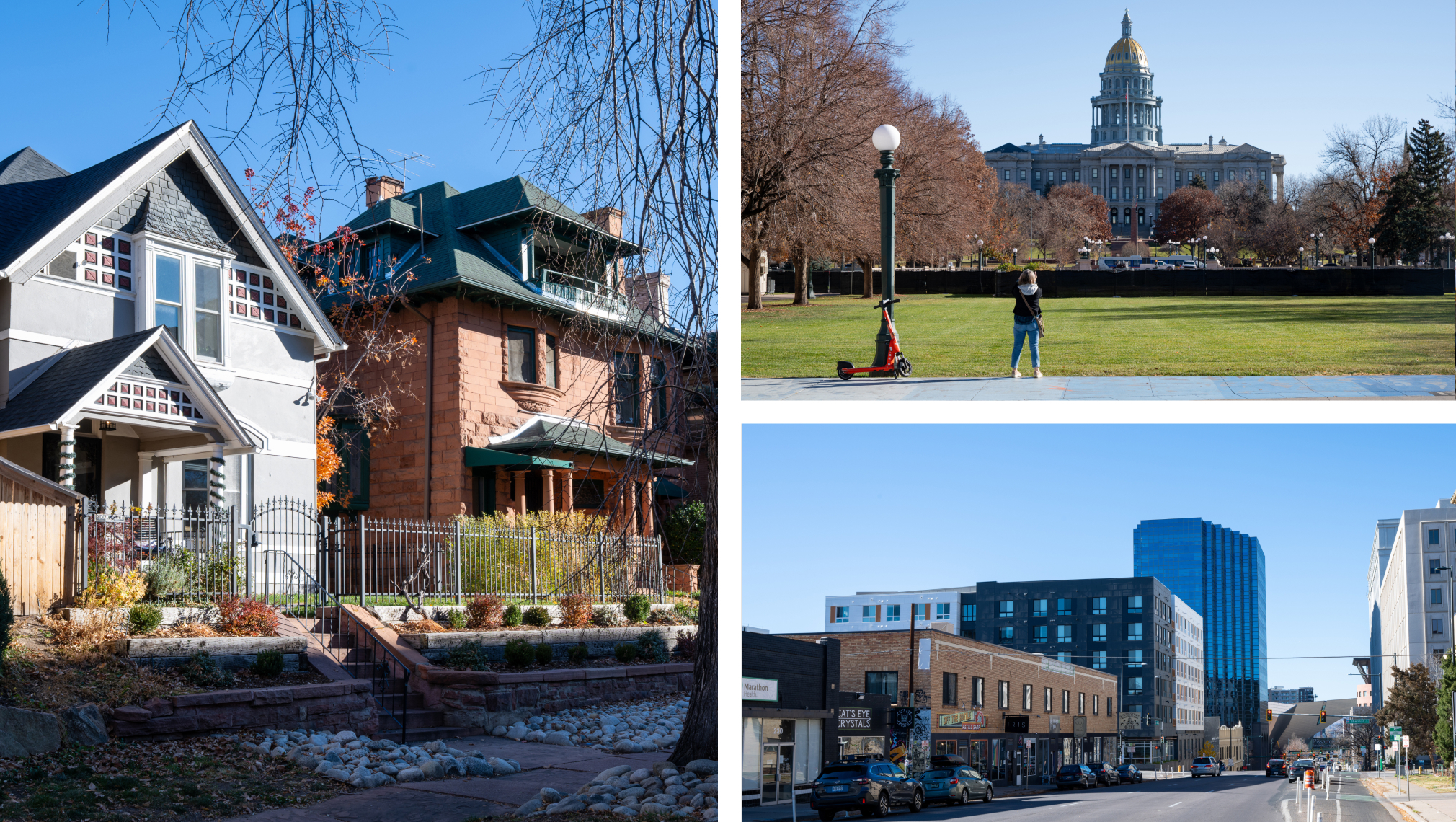
Located just south of Downtown Denver, Capitol Hill is one of the city’s most vibrant and centrally positioned neighborhoods. As of October 2025, the median list price in Capitol Hill is $313,917, with many condos and one-bedroom units listing in the lower $200,000 range and renting for between $1,200 and $1,500 a month — larger properties can be quite a bit more expensive, sacrificing affordability. Its Walk Score is 94/100, classifying it as a “Walker’s Paradise” where daily errands don’t require a car.
Its proximity to Cheesman Park, key transit lines, downtown amenities and affordability in condominium pricing make Capitol Hill a particularly strong entry point for first-time buyers or investors seeking value without sacrificing location. At the same time, the neighborhood’s walkable streets, rich cultural life and historic charm — from the Molly Brown House to its many galleries, cafes and music venues — mean Capitol Hill is always a popular choice.
Capitol Hill key takeaways
- Typical home value: $322,019
- 1-year value change: -5.9%
- For sale inventory: 150
(Data through October 31, 2025)
Harvey Park
Harvey Park, in southwest Denver, is a quiet post-war neighborhood with mid-century ranch homes and mature trees. The community’s namesake park — featuring two lakes, walking paths, picnic areas and a seasonal pool — serves as a central gathering spot and gives the area a true neighborhood feel. As of October 2025, Harvey Park's typical home value is just over $476,000 —which, while just above what would be considered an affordable home price for a median income household in Denver at 20% down, is somewhat lower than other central Denver areas. Its residential character, access to transit and major roadways, and distinctive architectural style make it an appealing value option for buyers seeking suburban tranquility within the city.
Harvey Park key takeaways
- Typical home value: $476,364
- 1-year value change: -3.7%
- For sale inventory: 39
(Data through October 31, 2025)
Ruby Hill
Ruby Hill, in southwest Denver, sits on a gentle rise and is anchored by the expansive 160-acre Ruby Hill Park, which offers panoramic city views, a terrain bike course, winter sledding, and the Levitt Pavilion outdoor concert venue. The neighborhood features primarily mid-20th-century single-family homes, especially ranch-style houses, The average home value in Ruby Hill is just over $427,000 in Ruby Hill, making it more affordable than many other Denver areas. Recent city-supported affordable housing developments have added to its accessibility, while the park and surrounding open space provide recreation and community gathering opportunities.
Ruby Hill key takeaways
- Typical home value: $427,033
- 1-year value change: -5.3%
- For sale inventory: 27
(Data through October 31, 2025)
For lifestyle and community
For lifestyle and community, we look at neighborhoods like Baker, RiNo and LoDo, where proximity to public transit and entertainment meet a sense of community and creative expression. From the lively streets north of Downtown to the cultural and historic institutions in the city center, these are the neighborhoods where Denver’s energy comes to life.
RiNo (River North Art District)
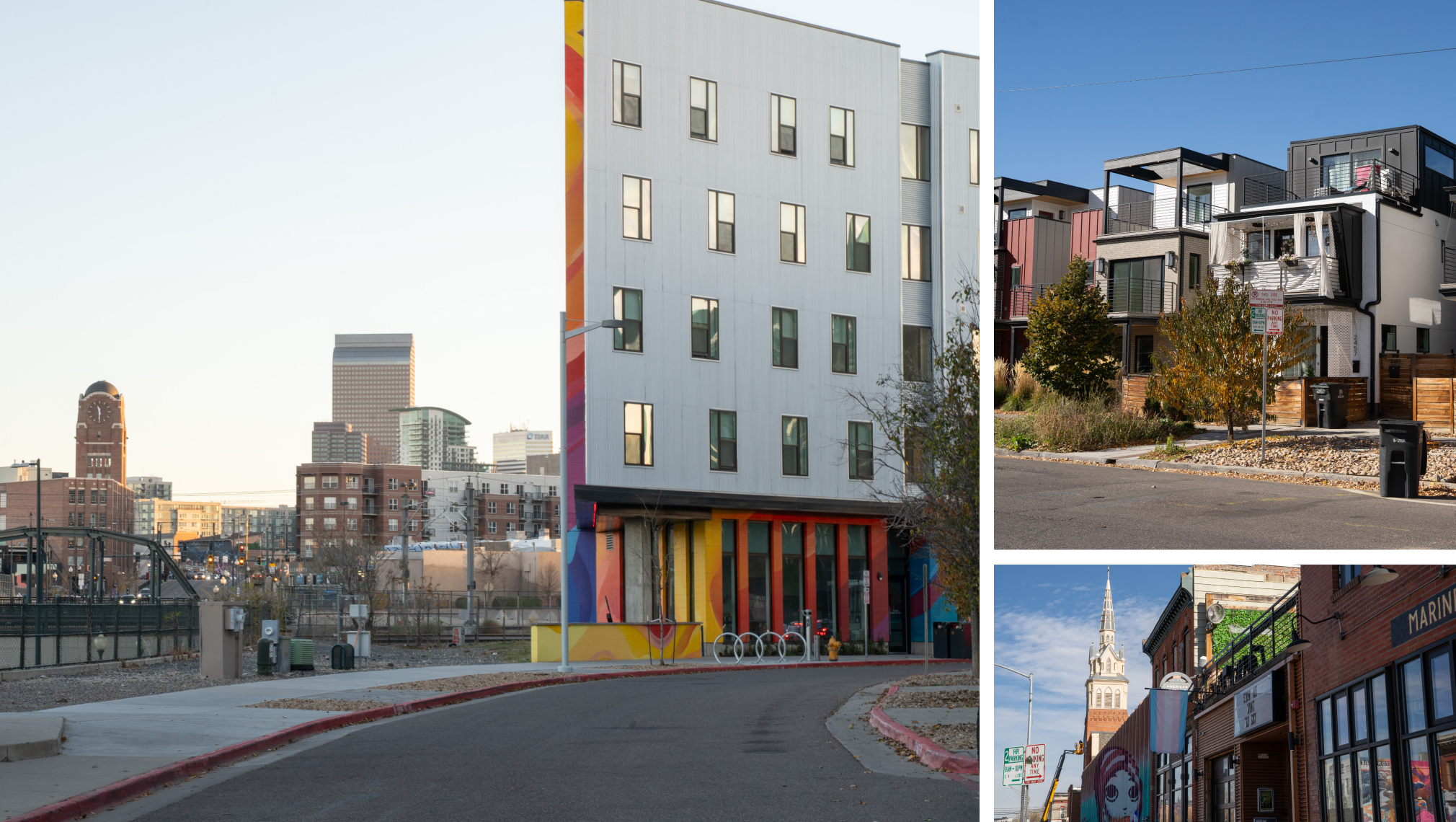
RiNo, short for River North Art District, is within the historic Five Points area, once known as the “Harlem of the West” for its rich cultural heritage. Today, RiNo is Denver’s creative epicenter, where street murals, galleries and converted warehouses celebrate art in every form. It’s packed with breweries, food halls, live music venues and independent shops, making it a top pick for those drawn to nightlife. The housing here includes newer lofts, townhomes and mixed-use developments.
Five Points key takeaways
- Typical home value: $581,252
- 1-year value change: -4.6%
- For sale inventory: 126
(Data through October 31, 2025)
LoDo (Lower Downtown)
LoDo (Lower Downtown), located just west of the Platte River and surrounding Union Station, sits at the heart of Denver’s original downtown. Known for its historic 19th-century brick warehouses, Victorian commercial buildings, and preserved industrial architecture, LoDo blends the city’s rich past with modern urban life. The neighborhood is ideal for career-driven buyers and sports fans alike, with Coors Field, Ball Arena and Pepsi Center all nearby. Residents also have easy access to cultural destinations such as the Denver Art Museum, Union Station events, and Molly Brown House Museum. LoDo’s streets are filled with restaurants, nightlife, boutique shops, and regular community events. Housing options range from loft-style condos in renovated historic buildings to contemporary high-rise apartments, offering a mix of character and modern convenience.
LoDo/Union Station key takeaways
- Typical home value: $632,577
- 1-year value change: -5.8%
- For sale inventory: 145
(Data through October 31, 2025)
Baker
Baker is one of Denver’s oldest neighborhoods, officially designated a historic district in 2000, with tree-lined streets filled with well-preserved Queen Anne, Victorian eclectic, Denver Square — a distinctive early-20th-century style featuring a boxy two-story layout with a front porch and central staircase — bungalow and cottage-style homes, many designed by notable local architects. Its development was shaped by late-19th and early-20th century streetcar lines along Broadway, which helped establish Baker as a working- and middle-class area; many original “worker houses” survive on the south end of the district. Today, South Broadway remains the neighborhood’s commercial heart, featuring independent shops, cafés, craft breweries, galleries, live music venues, and landmarks like the Mayan Theatre and historic storefronts. With a walkable grid, frequent bus routes, and close proximity to downtown, Baker blends practical urban living with a strong sense of historic character.
Baker key takeaways
- Typical home value: $557,842
- 1-year value change: 5.0%
- For sale inventory: 44
(Data through October 31, 2025)
For luxury and high-end living
Neighborhoods like Cherry Creek, LoHi, Hilltop and Washington Park are home to some of Denver’s most desirable properties, where buyers can expect premium finishes, spacious square footage and modern touches. Beyond the homes themselves, these areas are defined by high-end dining and shopping and convenient access to cultural amenities.
Cherry Creek
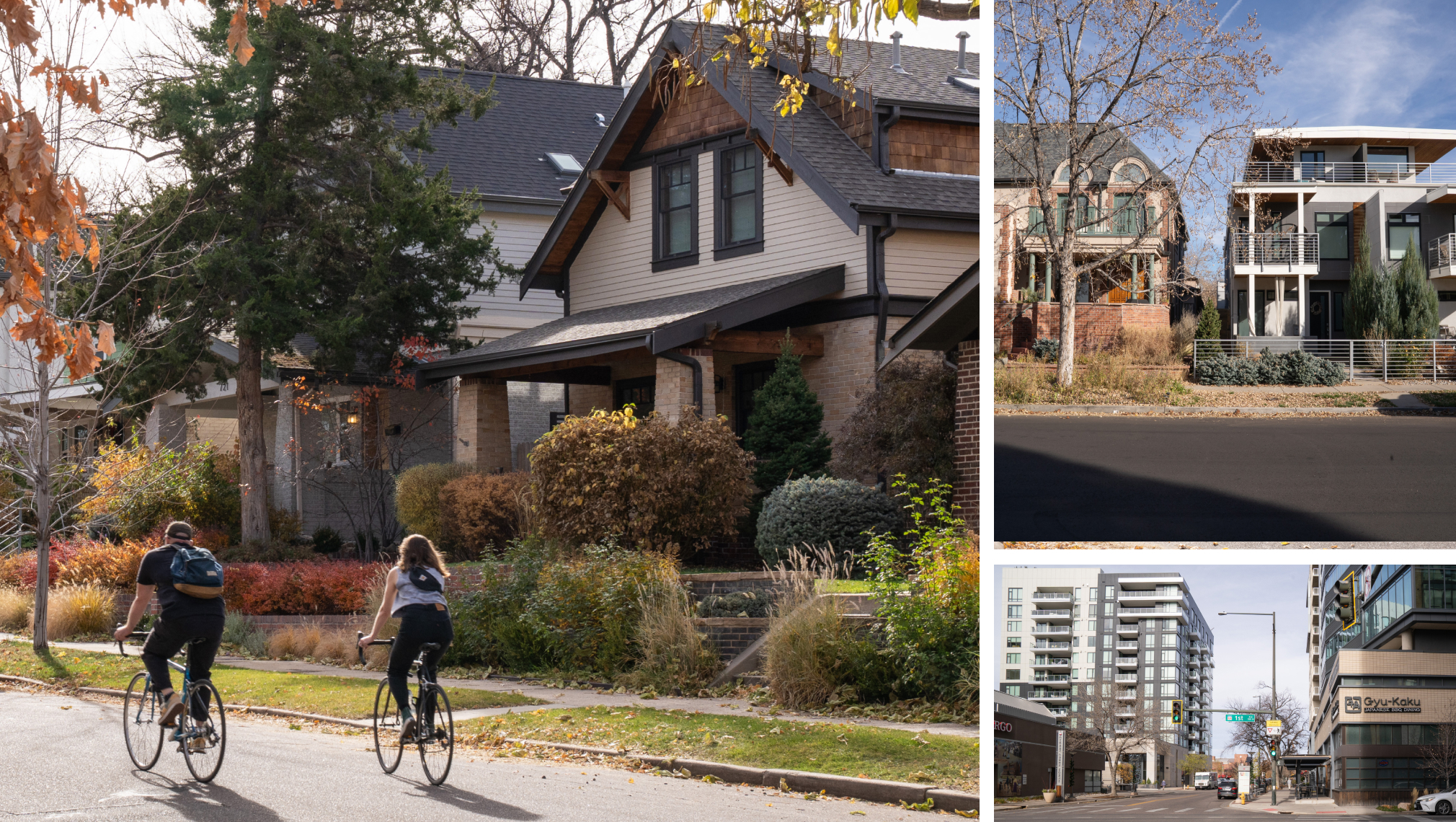
Cherry Creek is one of Denver’s most sought-after neighborhoods, prized for its combination of location, lifestyle, and high-quality housing. The area offers luxury shopping along the Cherry Creek Shopping Center and the boutique-lined Cherry Creek North district, and a wide selection of fine dining and acclaimed restaurants. In Cherry Creek, you’re within easy access to cultural amenities like the Denver Art Museum, Civic Center Park, and local galleries. Buyers here pay a premium for beautifully finished condos and estates, top-tier construction, and convenient access to downtown and major commuting corridors. Cherry Creek appeals particularly to executives and established professionals who value prestige, walkable streets, recreational options, and a neighborhood that balances urban convenience with a polished residential atmosphere.
Cherry Creek key takeaways
- Typical home value: $1,183,052
- 1-year value change: -1.9%
- For sale inventory: 76
(Data through October 31, 2025)
LoHi (Highland)
LoHi (Lower Highlands) lies just across the pedestrian bridge from Downtown Denver and offers a unique mix of historic charm and modern urban energy. From renovated Victorian‑era and bungalow homes to sleek lofts, condos, and townhomes, the architecture here reflects both its 19th‑century roots and contemporary development. From rooftop patios and restaurant decks, LoHi delivers some of the best skyline‑and-mountain views in the city — largely thanks to its elevated perch and the Highland Bridge linking it directly to downtown.
But what really makes LoHi desirable are the amenities: Its streets are packed with independent shops, art galleries and a diverse, celebrated food and drink scene, from globally inspired small restaurants to craft breweries. Residents enjoy walkability, easy access to downtown via bridge or transit and the energy of a neighborhood that blends nightlife, dining and everyday conveniences with a residential feel.
Highland key takeaways
- Typical home value: $714,225
- 1-year value change: -6.7%
- For sale inventory: 96
(Data through October 31, 2025)
Hilltop
Hilltop, east of Cherry Creek, is known for its spacious streets, generous lot sizes and elegant early‑20th‑century architecture, including Tudor and Colonial homes alongside custom-built residences. Unlike many Denver neighborhoods, Hilltop’s topography gently rolls, giving homes elevated views of the city and surrounding mountains. Its abundant green spaces, such as Cranmer Park and Robinson Park, provide expansive lawns, walking paths and recreational opportunities, while nearby highly regarded schools and easy access to Cherry Creek’s shopping and dining districts enhance its appeal. Together, these features create a serene, upscale enclave prized for both its lifestyle and distinctive character.
Hilltop key takeaways
- Typical home value: $1,457,313
- 1-year value change: -3.0%
- For sale inventory: 47
(Data through October 31, 2025)
Washington Park
Washington Park is anchored by its 165-acre namesake park, a beautifully landscaped space with lakes, formal gardens, and the popular Outer Loop for walking, running, and biking. The surrounding streets are lined with a mix of historic Denver Squares, Craftsman-style homes, and high-end redevelopments. Compared with many Denver neighborhoods, Washington Park’s lots and streets are notably larger and more open, giving the area a sense of spaciousness and allowing for generous front and back yards. Its combination of tree-lined streets, proximity to light rail and major corridors, and access to recreational amenities contributes to a lifestyle that blends luxury with an active, park-oriented focus.
Washington Park key takeaways
- Typical home value: $1,185,554
- 1-year value change: -0.3%
- For sale inventory: 67
(Data through October 31, 2025)
For schools and higher education
We selected neighborhoods that are great for schools and higher education based on their GreatSchools ratings, district performance and other related indicators, like proximity to family-friendly parks. Denver neighborhoods like Park Hill, Wellshire, University and Auraria stand out, offering access to highly rated public and private schools, nearby daycare and preschool options and parks and recreational facilities.
Park Hill
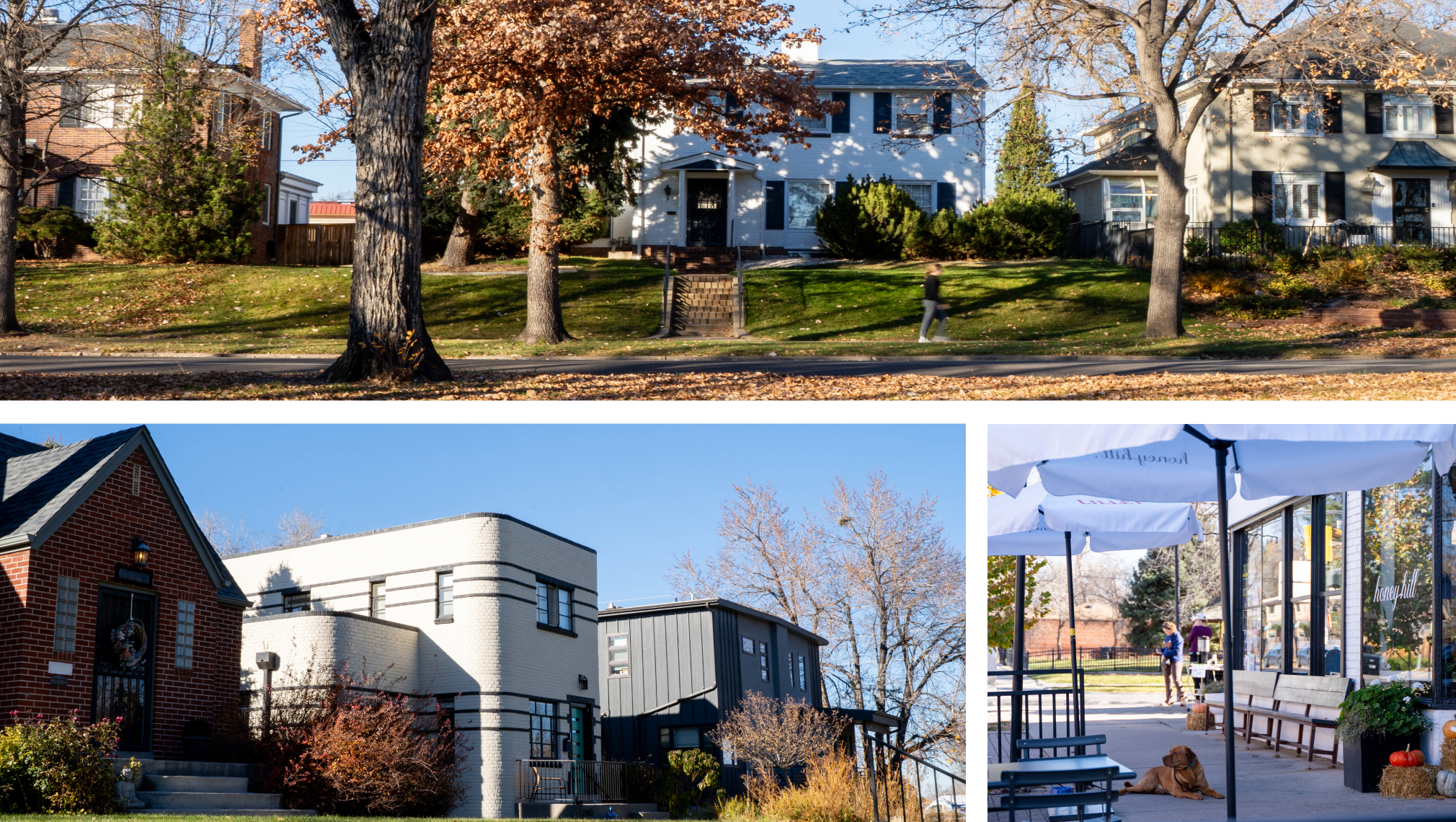
Park Hill is widely recognized for its strong lineup of public, charter, and private schools, making it one of Northeast Denver’s most education-focused neighborhoods. Families are drawn to its well-regarded elementary options — such as Park Hill Elementary and Stedman Elementary — both known for active parent communities and diverse student populations. Middle school pathways commonly include McAuliffe International School, a highly sought-after IB program, and the proximity to Denver School of the Arts adds an additional draw for students pursuing specialized programs.
Park Hill’s central location complements its academic offerings, giving students easy access to parks, libraries, and cultural institutions in nearby City Park. Community involvement is strong, with neighborhood organizations frequently collaborating with schools on events and enrichment programs. Overall, Park Hill’s combination of educational opportunity, stability, and walkability makes it a standout choice for families prioritizing school quality within Denver.
North Park Hill key takeaways
- Typical home value: $640,057
- 1-year value change: -4.1%
- For sale inventory: 55
(Data through October 31, 2025)
Wellshire
Wellshire is known not only for its quiet, residential character but also for its access to several of southeast Denver’s most well-regarded public schools. The neighborhood is served primarily by Slavens K-8, a consistently popular choice among families due to its strong academic performance and robust extracurricular offerings that range from STEM clubs to arts programs. Many Wellshire residents also feed into Thomas Jefferson High School, appreciated for its acclaimed Computer Magnet Program, diverse course pathways, and active parent community.
These school options reinforce Wellshire’s reputation as a family-oriented enclave. Combined with larger lots, mid-century homes, and ongoing reinvestment, the area attracts households looking for strong educational continuity from elementary through high school. The Wellshire Golf Course and surrounding open space add to the neighborhood’s calm, suburban feel, while proximity to parks and major corridors like Hampden Avenue ensures convenient access to the broader metro area.
Wellshire key takeaways
- Typical home value: $1,132,363
- 1-year value change: +1.1%
- For sale inventory: 16
(Data through October 31, 2025)
University
The University neighborhood is shaped by the presence of the University of Denver, a nationally recognized private research institution known for its strong business, international studies, and law programs, as well as year-round public events, performances and Division I athletics that add steady activity to the area. Surrounding residential streets feature early-20th-century homes, brick bungalows, and small multifamily buildings, drawing a mix of long-term residents, faculty, and students. University’s access to several notable parks — including Harvard Gulch Park with its recreation center and par-3 golf course, DeBoer Park along the campus edge, and nearby Observatory Park with its historic Chamberlin Observatory — offers abundant outdoor space. Washington Park is also just a short bike ride away. Walkable commercial pockets along University Boulevard provide daily conveniences and dining options, while the University of Denver light-rail station ensures easy connections to downtown, the Tech Center and other major destinations across the metro area.
University key takeaways
- Typical home value: $646,875
- 1-year value change: -3.6%
- For sale inventory: 64
(Data through October 31, 2025)
Auraria
Auraria sits just west of downtown Denver and functions primarily as the city’s central academic and cultural district, anchored by the Auraria Higher Education Center — a shared campus for the University of Colorado Denver, Metropolitan State University of Denver, and the Community College of Denver. Rather than a residential neighborhood, Auraria operates as an institutional hub where daily life revolves around classrooms, lecture halls, student centers, and a network of cultural venues like the King Center for the Performing Arts. The Tivoli Student Union, a repurposed historic brewery, houses dining, gathering spaces, and campus services. The area also contains several preserved historic landmarks from the original Auraria townsite, blending 19th-century structures with modern academic architecture. Auraria’s adjacency to downtown offices, major transit lines, the Ball Arena complex, and the Cherry Creek trail system, makes Auraria one of Denver’s most interconnected and activity-rich parts of the urban core.
Auraria key takeaways
- Typical home value: $710,029
- 1-year value change: -5.0%
(Data through October 31, 2025)
For quiet living
Denver’s quieter neighborhoods offer abundant green space and easy access to outdoor recreation while still sitting within a practical commute of the city center. Daily life tends to feel more relaxed in neighborhoods like Sloan Lake, Berkeley and Congress Park, with nearby parks, trails, and larger yards contributing to a sense of stability — without requiring residents to give up the conveniences of urban living.
Sloan Lake
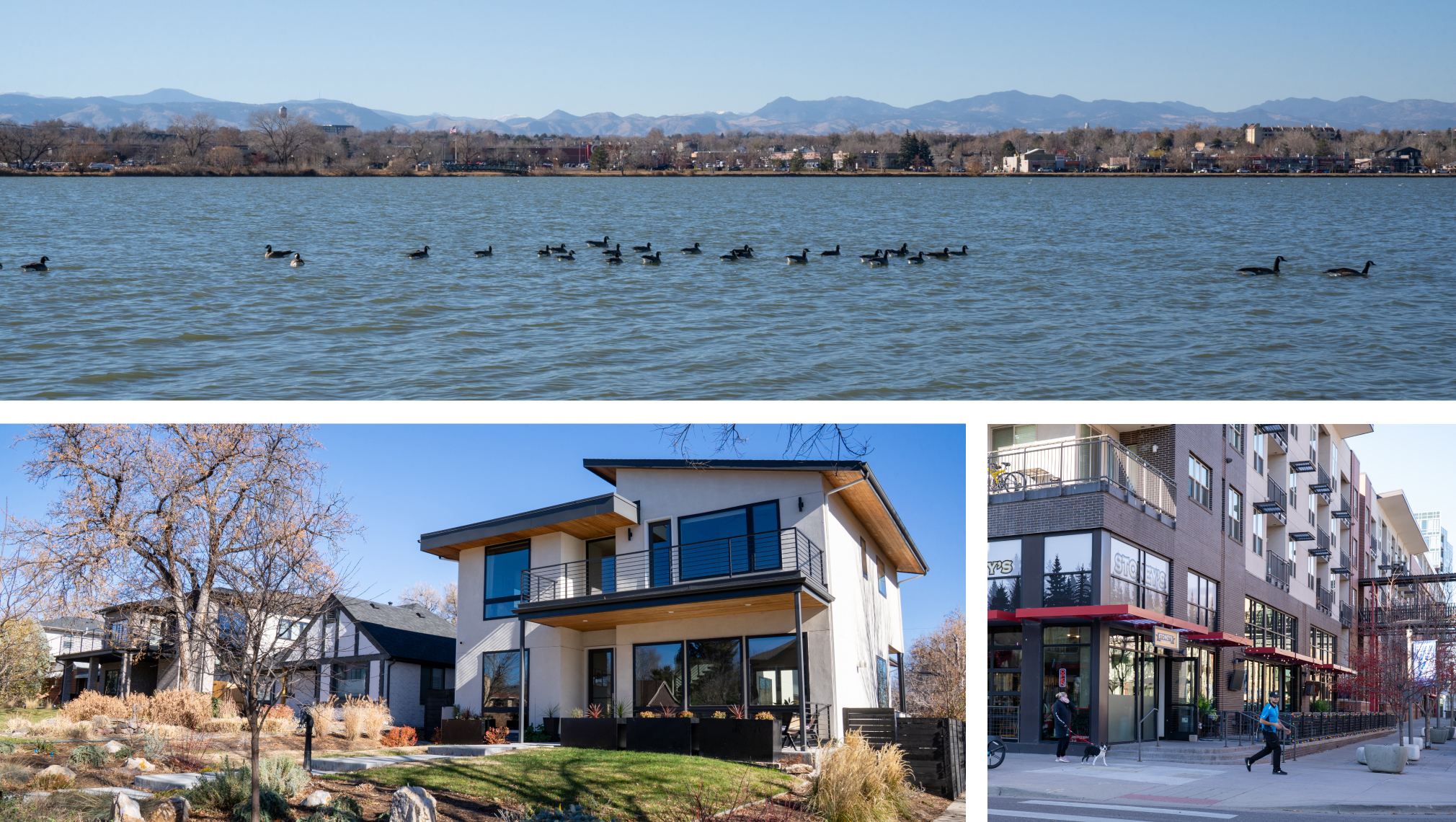
Sloan Lake, also referred to as Sloan’s Lake, occupies a calm stretch of Northwest Denver, with a 177-acre namesake lake and the park that surrounds it. Residential streets feature a mix of mid-century homes, brick bungalows and newer single-family builds, all set on walkable blocks with access to shoreline paths. While the edges near West Colfax and Highland see more activity, the interior streets maintain a slower pace shaped by open space, uninterrupted lake views and a strong community presence around daily recreation.
Sloan Lake key takeaways
- Typical home value: $779,816
- 1-year value change: -4.3%
- For sale inventory: 54
(Data through October 31, 2025)
Berkeley (Denver West Side)
Berkeley sits along Denver’s West Side and is anchored by two of the area’s most active commercial corridors: Tennyson Street and Lowell Boulevard — known for their locally owned restaurants, coffee shops, boutiques and regular community events that give the neighborhood a distinct village-like center. Just a few blocks off these streets, the atmosphere shifts quickly to quiet residential pockets with early-20th-century bungalows, updated single-family homes, and small-scale multifamily buildings. The neighborhood’s two lakes — Berkeley Lake and Rocky Mountain Lake — provide generous open space, walking paths and a calmer setting that defines much of daily life, balancing the energy of the commercial corridors with a predominantly relaxed, residential feel.
Berkeley key takeaways
- Typical home value: $751,731
- 1-year value change: -3.5%
- For sale inventory: 63
(Data through October 31, 2025)
Congress Park
Congress Park lies just east of Capitol Hill and maintains a quieter residential character despite its central location. The neighborhood consists of early-20th-century homes, including Denver Squares, Craftsman styles and brick bungalows. Congress Park itself offers athletic fields, a pool and tree-covered lawns that shape the area’s residential feel. Its proximity to major cultural institutions like the Denver Botanic Gardens and the Clyfford Still Museum contrasts with the steady, more peaceful pace found within its interior blocks.
Congress Park key takeaways
- Typical home value: $750,785
- 1-year value change: -2.3%
- For sale inventory: 58
(Data through October 31, 2025)
How to choose a neighborhood in Denver
Choosing where to live in Denver comes down to balancing your priorities — whether that’s affordability, walkable culture, high-end comfort, top-rated schools, or quiet, park-filled streets. Denver’s neighborhoods are diverse enough to fit nearly every lifestyle, so your perfect match depends on which mix of convenience, character, and amenities aligns with your daily routine. Looking for your next home in Denver? Partner with a local Denver agent to explore listings across this versatile city.
- For affordability and value: Consider living in Capitol Hill or Harvey Park, where buyers find attainable home prices, strong transit access, and long-term growth potential.
- For lifestyle and community: Consider living in RiNo (Five Points) or LoDo, known for their vibrant arts, dining, and nightlife scenes paired with downtown convenience.
- For luxury and high-end living: Consider living in Cherry Creek or LoHi, where modern architecture, boutique retail, and refined dining define Denver’s upscale market.
- For schools and higher education: Consider living in Park Hill or Washington Park, which combine top-rated schools with family-friendly parks and spacious homes.
- For quiet living: Consider living in Sloan’s Lake or Berkeley, both offering tree-lined streets, local charm, and relaxed proximity to downtown.
Explore other Denver neighborhoods
Photos by Zillow Listing Media Services
How much home can you afford?
At Zillow Home Loans, we can pre-qualify you in as little as 5 minutes, with no impact to your credit score.
Zillow Home Loans, NMLS # 10287. Equal Housing Lender
Get pre-qualifiedA great agent makes all the difference
A local agent has the inside scoop on your market and can guide you through the buying process from start to finish.
Learn moreRelated Articles
Download the Zillow App
Don’t miss out on the right home for you — browse up-to-date listings, refine your search and more.
Download the free app