
Written by Jennifer Lyons on December 3, 2025
Reviewed by Alycia Lucio and Ian Port, Edited by Suzanne De Vita
From the bustle of Manhattan to the more suburban Staten Island, New York City has a borough and neighborhood for every lifestyle. Embrace the buzz of the city in Hudson Yards or Tribeca, or seek out the quieter side of the Big Apple in Middle Village or the Upper East Side.
Check out the best neighborhoods in New York for:
- Affordability and value
- Lifestyle and community
- Luxury and high-end living
- Schools and higher education
- Quiet living
For affordability and value
With the city’s typical rent at $3,398 as of October 2025 and the median home sale price at $770,000 as of September 2025, New York City is known for its high cost of living.
That doesn’t mean every neighborhood is out of reach, though. Forest Hills in Queens, Riverdale in the Bronx and Washington Heights in northern Manhattan offer some of the best value in New York. Here’s what to know about these more affordable areas.
Forest Hills
Forest Hills is located in Queens between Rego Park and Kew Gardens. It’s one of the more attainable areas of the borough, with a median home sale price of $449,000 as of September 2025 and a median asking rent of $2,998. Housing in Forest Hills ranges from early 20th-century Tudor-style homes in Forest Hills Gardens to mid-century co-ops and newer condo developments closer to Queens Boulevard.
Austin Street is Forest Hills’ main commercial corridor, while Forest Park and the historic Forest Hills Stadium offer a unique combination of green space and amphitheater-style concerts from top performers. There are also many routes to Manhattan, including the E, F, M and R subway lines and the Long Island Rail Road (LIRR) at Forest Hills station.
Forest Hills key takeaways
- Typical home value: $512,896
- 1-year value change: +0.9%
- For sale inventory: 421
- Median asking rent: $2,998
(Data through October 31, 2025)
Riverdale
Riverdale is in the Bronx — the northernmost borough of New York City — and bordered by the Hudson River. Riverdale remains one of the most affordable areas in New York, with a median home sale price of $344,667 as of September 2025. The neighborhood includes several subareas, such as Fieldston, Spuyten Duyvil and North Riverdale, that contain single-family homes, mid-century co-ops and larger apartment buildings along the riverfront.
One of the biggest draws to Riverdale is undoubtedly Van Cortlandt Park. Bordering Riverdale to the east, it’s the third-largest park in New York City and boasts sports fields, a huge lawn for lunging, and even some wooded trails. For commuters, Metro-North’s Hudson Line provides direct service to Manhattan, while local bus routes connect to the 1 subway train.
Riverdale key takeaways
- Typical home value: $398,615
- 1-year value change: +4.1%
- For sale inventory: 278
- Median asking rent: $3,025
(Data through October 31, 2025)
Washington Heights
Washington Heights, located in northern Manhattan just north of Harlem, is one of New York’s more budget-friendly options, with a median list price of $504,666 as of October 2025 and median asking rent of $2,850. The housing style in Washington Heights includes prewar apartment buildings, Art Deco co-ops and renovated condos, many with more interior space than typical Manhattan units.
Washington Heights is also home to several major parks and cultural sites. Fort Tryon Park is a dream for apartment-dwelling dog owners, while the Cloisters, part of the Metropolitan Museum of Art, give visitors a glimpse into medieval Europe right in Manhattan.
Washington Heights key takeaways
- Typical home value: $568,103
- 1-year value change: +1.1%
- For sale inventory: 145
- Median asking rent: $2,850
(Data through October 31, 2025)
For lifestyle and community
Many New York neighborhoods boast cultural attractions, diverse dining options, and entertainment, but Astoria and Downtown Brooklyn especially stand out and provide easy access to transit. Both are also highly walkable — Downtown Brooklyn is rated with a 97 Walk Score and Astoria a 94. For those who want a slightly slower pace with similar access to Manhattan, St. George is a standout. Here’s what to know about these neighborhoods.
Astoria
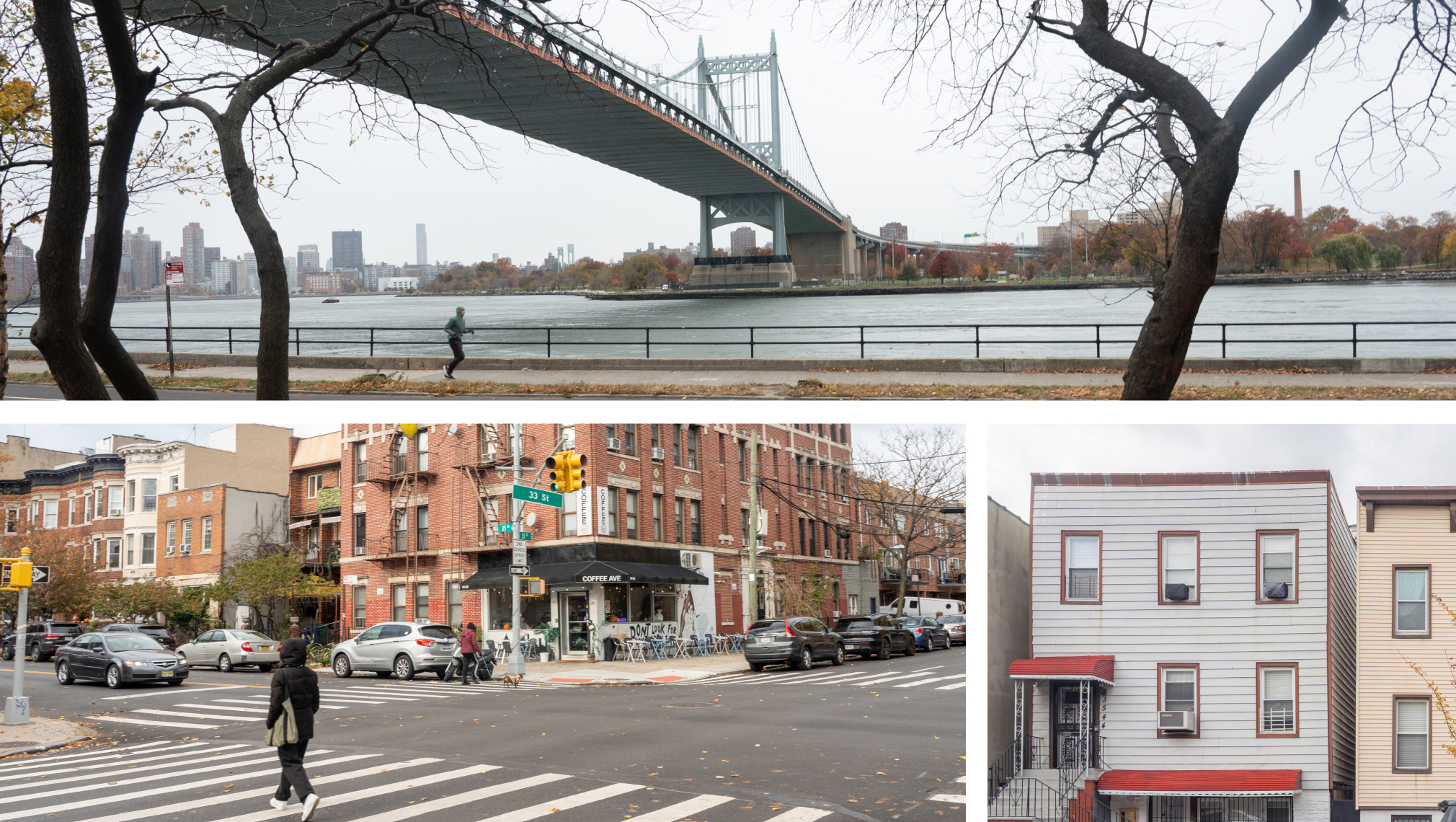
Astoria is located in northwest Queens, on the East River. The neighborhood has a long-established restaurant scene concentrated along 30th Avenue and Broadway, where global cuisines reflect the area’s diverse community — Greek and Egyptian fare are especially prevalent. Astoria Park provides waterfront paths, athletic facilities and views of Hell Gate Bridge over the river, and the Museum of the Moving Image is also located here.
The housing options in Astoria include prewar apartment buildings, mid-century walk-ups and newer developments near the N and W subway lines.
Astoria key takeaways
- Typical home value: $756,898
- 1-year value change: +5.5%
- For sale inventory: 298
- Median asking rent: $3,199
(Data through October 31, 2025)
St. George
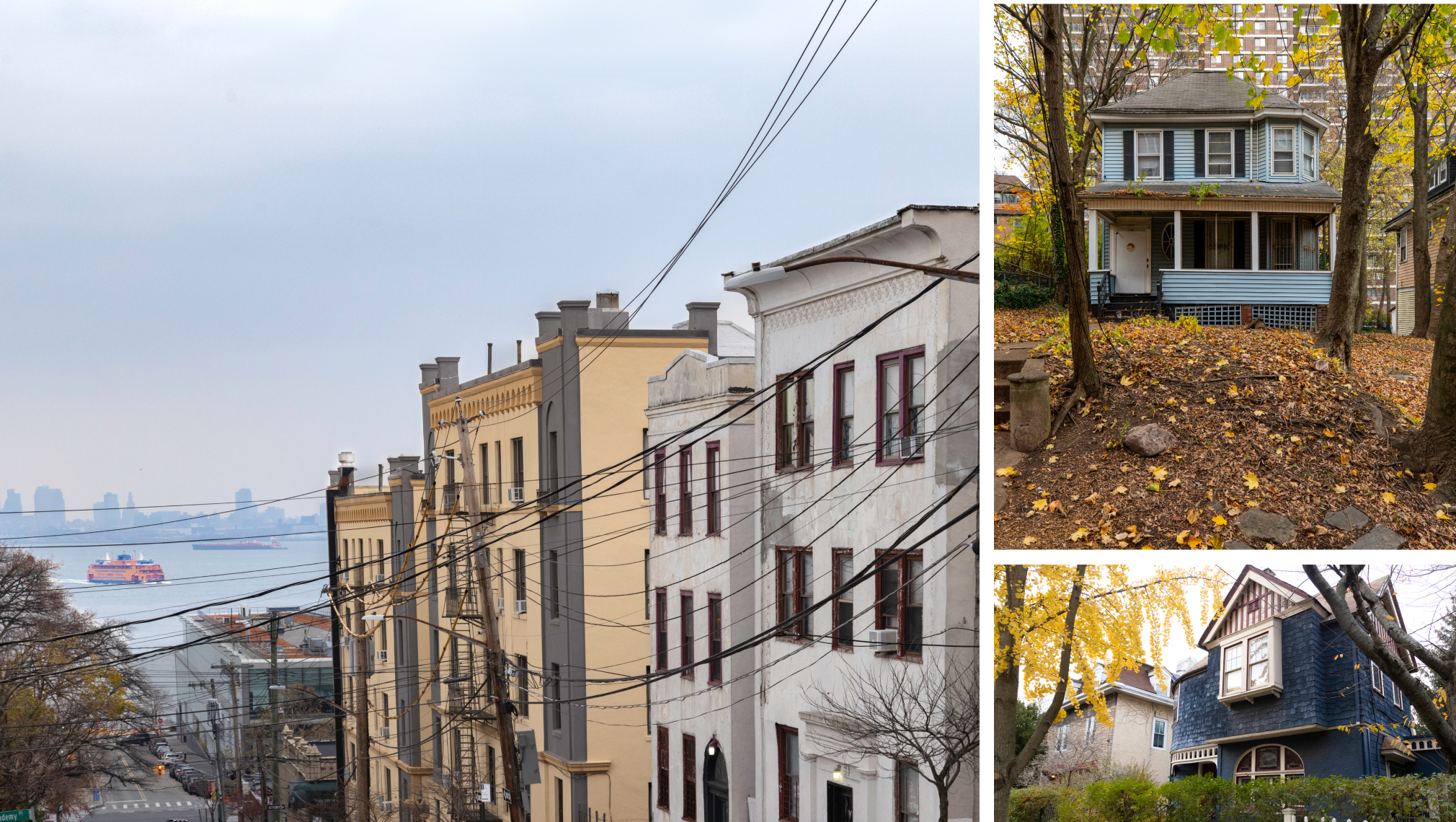
St. George on Staten Island is a waterfront neighborhood known for its calmer lifestyle, walkable hills, and direct access to the Staten Island Ferry, giving residents an easy, scenic commute to Manhattan. The area has a mix of prewar apartment buildings, newer condos, and mid-rise developments, with local cafés, small restaurants, and the St. George Theatre adding charm without overwhelming busyness. Daily life feels relaxed, with access to waterfront esplanades, quiet residential blocks, and cultural spots like Snug Harbor just minutes away. Transit is anchored by the ferry, plus several local bus routes connecting to the North Shore and the rest of Staten Island.
St. George key takeaways
- Typical home value: $608,266
- 1-year value change: -0.2%
- For sale inventory: 26
- Median asking rent: $3,330
(Data through October 31, 2025)
Downtown Brooklyn
Downtown Brooklyn is bordered by Fort Greene, Boerum Hill and Brooklyn Heights. It’s one of New York’s most transit-accessible neighborhoods, with multiple subway lines — including the A, C, F, R, 2, 3, 4 and 5 — converging at Jay Street-MetroTech and nearby stations. Downtown Brooklyn has a dense collection of residential high-rises, modern mixed-use towers and converted commercial buildings.
But more than the housing and the transit, Downtown Brooklyn has the dynamic, urban vibes that many residents crave when considering a move to New York. Whether it’s a leisurely afternoon spent browsing vintage shops and flea markets, the friendly hello from your neighborhood bodega owner, sampling food from all over the world in restaurants and food halls, Brooklyn comes alive around every corner. Downtown is also a great neighborhood for sports lovers: Barclays Center is the home of the Brooklyn Nets, New York Liberty and New York Islanders.
Downtown Brooklyn key takeaways
- Typical home value: $1,045,818
- 1-year value change: +2.6%
- For sale inventory: 97
- Median asking rent: $4,450
(Data through October 31, 2025)
For luxury and high-end living
New York City’s luxury neighborhoods represent some of the most exclusive and high‑value real estate in the U.S. Here’s a look at the Upper East Side, Dumbo, Carroll Gardens, Hudson Yards and Tribeca, all of which combine architectural prestige, high-end amenities and access to business centers, arts institutions, walkability and more.
Upper East Side
The Upper East Side (UES) offers an iconic blend of upscale, refined living and quintessential New York elegance — from classic pre-war brownstones and elegant co-op buildings to high-end condos with luxe finishes and skyline or Central Park views. With world-class cultural institutions like the Metropolitan Museum of Art and the Guggenheim, designer boutiques, renowned private and public schools, premier dining, and easy access to the tranquility of parks and riverside promenades, Upper East Side delivers the prestige, privacy, and amenities many expect from a top-tier Manhattan neighborhood. Its walkable, tree-lined streets and quiet residential feel (on many blocks) combine with robust transit — making it ideal for those who want both convenience and discretion, with a stable, upscale urban lifestyle.
Upper East Side key takeaways
- Typical home value: $1,312,206
- 1-year value change: +2.7%
- For sale inventory: 1,160
- Median asking rent: $4,165
(Data through October 31, 2025)
Dumbo
Dumbo (Down Under the Manhattan Bridge Overpass) is on the Brooklyn waterfront, adjacent to the Brooklyn and Manhattan Bridges. As of October 2025, the typical home value here is about $1.72 million.
Dumbo is known for converted industrial lofts, modern condominium towers and cobblestone streets with stunning views of the East River and Manhattan skyline. The area’s walkability, parks (like Brooklyn Bridge Park) and high-fashion retail make Dumbo a top-tier luxury enclave, while attractions like the Brooklyn Flea Market and St. Ann’s Warehouse — a renowned theater and music venue in a converted industrial building — keep the vibe unique and artsy.
Dumbo key takeaways
- Typical home value: $1,717,789
- 1-year value change: +2.0%
- For sale inventory: 93
- Median asking rent: $5,598
(Data through October 31, 2025)
Carroll Gardens
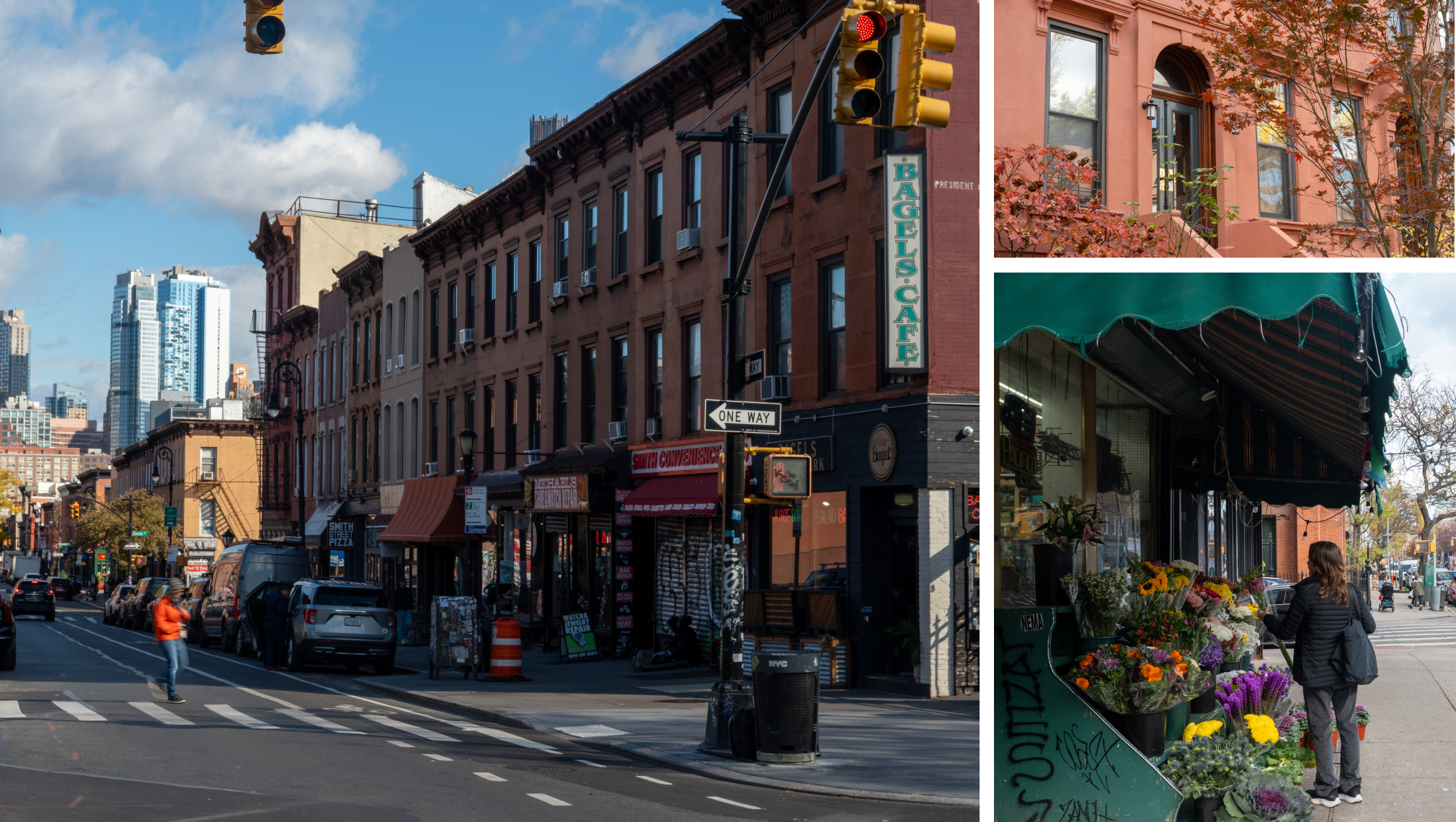
Carroll Gardens is a historic neighborhood in Brooklyn, characterized by its brownstone-lined, tree-filled streets, low-rise buildings, and a charming neighborhood vibe. It blends a sense of relaxed, residential living with easy access to boutique shops, artisanal food spots, and trendy dining — while still being well connected to the rest of NYC via subway (F and G lines) and buses.
Over recent decades, the area has earned a reputation as an upscale, desirable residential enclave, often sought out by families and professionals wanting a mix of character, convenience, and community feel. In a nod to its Italian-American roots, Carroll Gardens is a great place to indulge in traditional Italian cuisine.
Carroll Gardens key takeaways
- Typical home value: $1,904,770
- 1-year value change: +2.4%
- For sale inventory: 23
- Median asking rent: $4,500
(Data through October 31, 2025)
Hudson Yards
Located on Manhattan’s Far West Side, Hudson Yards is one of New York City’s most modern luxury developments, with ultra-high-rise condos, mixed-use towers and direct access to the High Line park and Hudson River waterfront. The typical home value in Hudson Yards is $1.99 million as of October 2025, down 1.2% in the last year.
The neighborhood’s noteworthy modern architecture, upscale retail shopping and transit access (including the 7, A, C, E and 34th Street-Hudson Yards subway station) continue to draw high-end buyers to Hudson Yards. Madison Square Garden is nearby, and many famous international chefs have outposts in this chic neighborhood.
Hudson Yards key takeaways
- Typical home value: $1,986,684
- 1-year value change: -1.2%
- For sale inventory: 49
(Data through October 31, 2025)
Tribeca
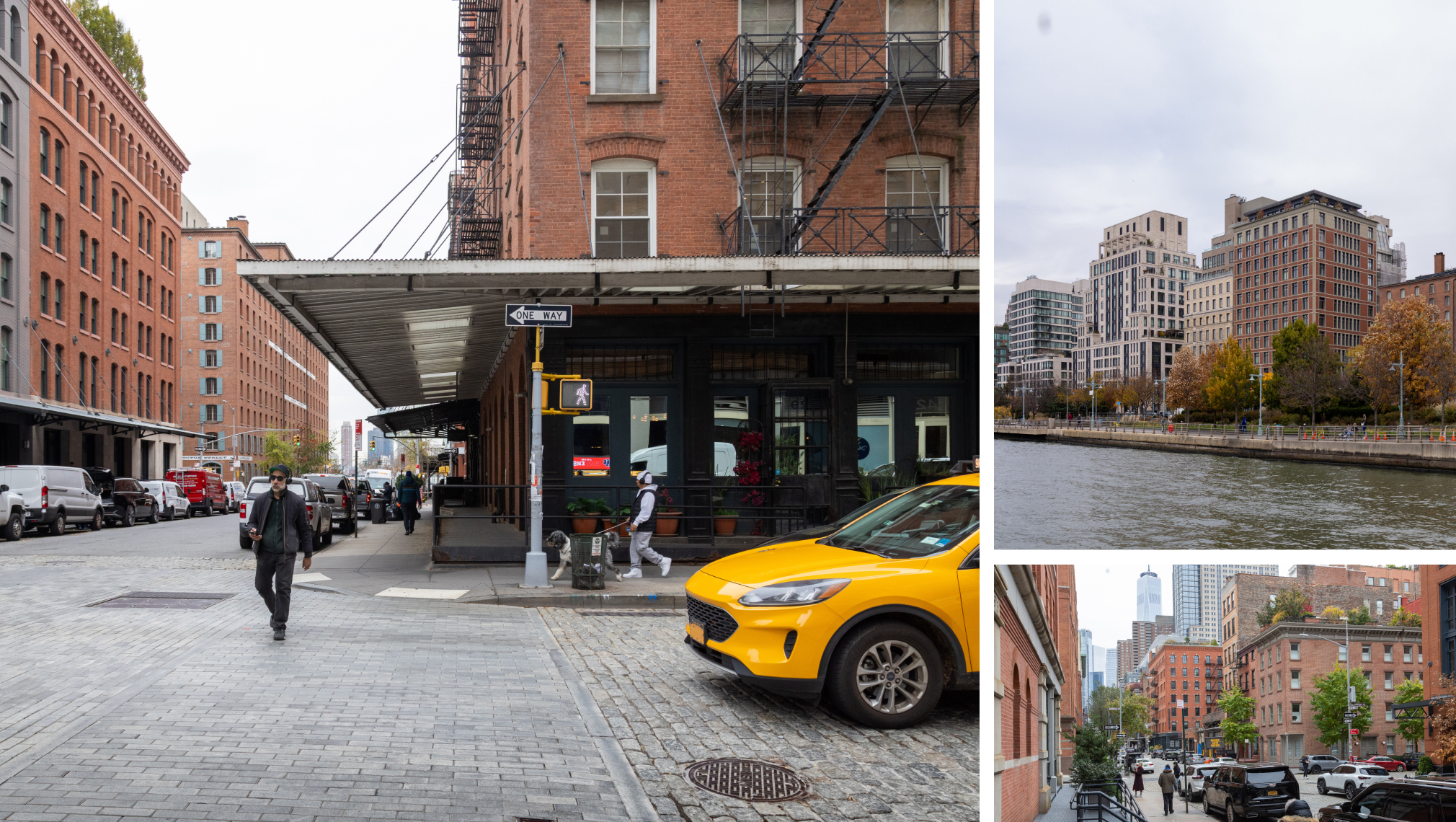
Tribeca is a Lower Manhattan neighborhood defined by its converted industrial lofts, cast-iron buildings and cobblestone streets. It’s positioned between the Hudson River waterfront and SoHo — another premier neighborhood. As of October 2025, Tribeca’s typical home value is $3.55 million.
In Tribeca, residential housing options range from full-floor lofts to modern condo developments with elevators and doorman services. Well known for its annual film festival, Tribeca is a hub for culture, with the Tribeca Performing Arts Center, numerous galleries, and interactive art exhibits. Tribeca also offers easy access to Hudson River Park, where you can take the waterfront walking and biking path north through Greenwich Village, Chelsea, and all the way to Hell’s Kitchen.
Tribeca key takeaways
- Typical home value: $3,553,047
- 1-year value change: +3.2%
- For sale inventory: 183
- Median asking rent: $7,895
(Data through October 31, 2025)
For schools and higher education
New York City has several highly-rated schools and other academic institutions, across many diverse neighborhoods. Battery Park City, Brooklyn Heights and Morningside Heights stand out in particular for schools. In addition, these neighborhoods provide convenient access to transit and a variety of housing options.
Battery Park City
Residents in Battery Park City have access to several well-regarded schools, including the top-tier Stuyvesant High School (rated one of the best public high schools in the U.S. by U.S. News), and Battery Park City School (PK-8) which has a GreatSchools rating of 9/10. Battery Park City is also in proximity to the Manhattan campus of Pace University, continually rated one of the best colleges in the U.S. and ranked number one by U.S. News for its environmental law program.
The housing in Battery Park City consists primarily of modern apartment towers and high-rise condos, many with Hudson River views and private amenities. The water views take center stage on the Esplanade, which includes paths, playgrounds and community events. The nearest transit options include the 1, R, and W subways and ferries to Lower Manhattan and Brooklyn.
Battery Park City key takeaways
- Typical home value: $1,136,586
- 1-year value change: +4.7%
- For sale inventory: 92
- Median asking rent: $5,249
(Data through October 31, 2025)
Brooklyn Heights
Across the East River from Lower Manhattan, Brooklyn Heights is defined by historic brownstones and an elevated promenade overlooking the city skyline. Brooklyn Heights has multiple highly-rated public schools, including Emily Warren Roebling School, which has a 9/10 ranking on GreatSchools.
Brooklyn Heights homes include classic brownstones, prewar walk-ups and some modern condo developments along key thoroughfares. The neighborhood is known for Fulton Street’s shopping, cafes, bakeries and cultural institutions, such as the Brooklyn Historical Society and Brooklyn Academy of Music nearby. There are also several parks in the area, including Brooklyn Bridge and Cadman Plaza parks.
Brooklyn Heights key takeaways
- Typical home value: $1,442,963
- 1-year value change: 3.9%
- For sale inventory: 74
- Median asking rent: $4,700
(Data through October 31, 2025)
Morningside Heights
Morningside Heights is in northern Manhattan, anchored by Morningside Park and Columbia University. The neighborhood includes a range of prewar apartment buildings and co-ops, with plenty of housing catered toward students. Even if you aren’t a student, living near an Ivy League school has its perks. Locals can attend free or low-cost events at the university, including lectures, concerts, and exhibits. And, because of the high propensity of students, transit is a breeze. Take the 1 train at 116th Street and multiple bus lines for quick commutes downtown and to other parts of the city.
Morningside Heights key takeaways
- Typical home value: $813,728
- 1-year value change: -2.9%
- For sale inventory: 70
- Median asking rent: $4,598
(Data through October 31, 2025)
For quiet living
The City That Never Sleeps still has some quieter neighborhoods, including Middle Village in Queens, Tottenville on Staten Island and the Upper West Side. Here, you’ll find a calmer pace, lower-rise housing and proximity to recreational amenities.
Middle Village
Middle Village in Queens is a quieter neighborhood with detached single-family homes and duplexes, smaller apartment buildings and co-ops. There are restaurants and shops concentrated in the Metropolitan Avenue and Fresh Pond Road area with minimal traffic. The beloved Juniper Valley Park provides a gathering space for rousing games of bocce, shuffleboard and more.
For transit, Middle Village has access to the M and R subway lines, as well as several bus routes that connect to adjacent Queens neighborhoods and Midtown Manhattan.
Middle Village key takeaways
- Typical home value: $877,987
- 1-year value change: +6.2%
- For sale inventory: 76
- Median asking rent: $3,000
(Data through October 31, 2025)
Upper West Side
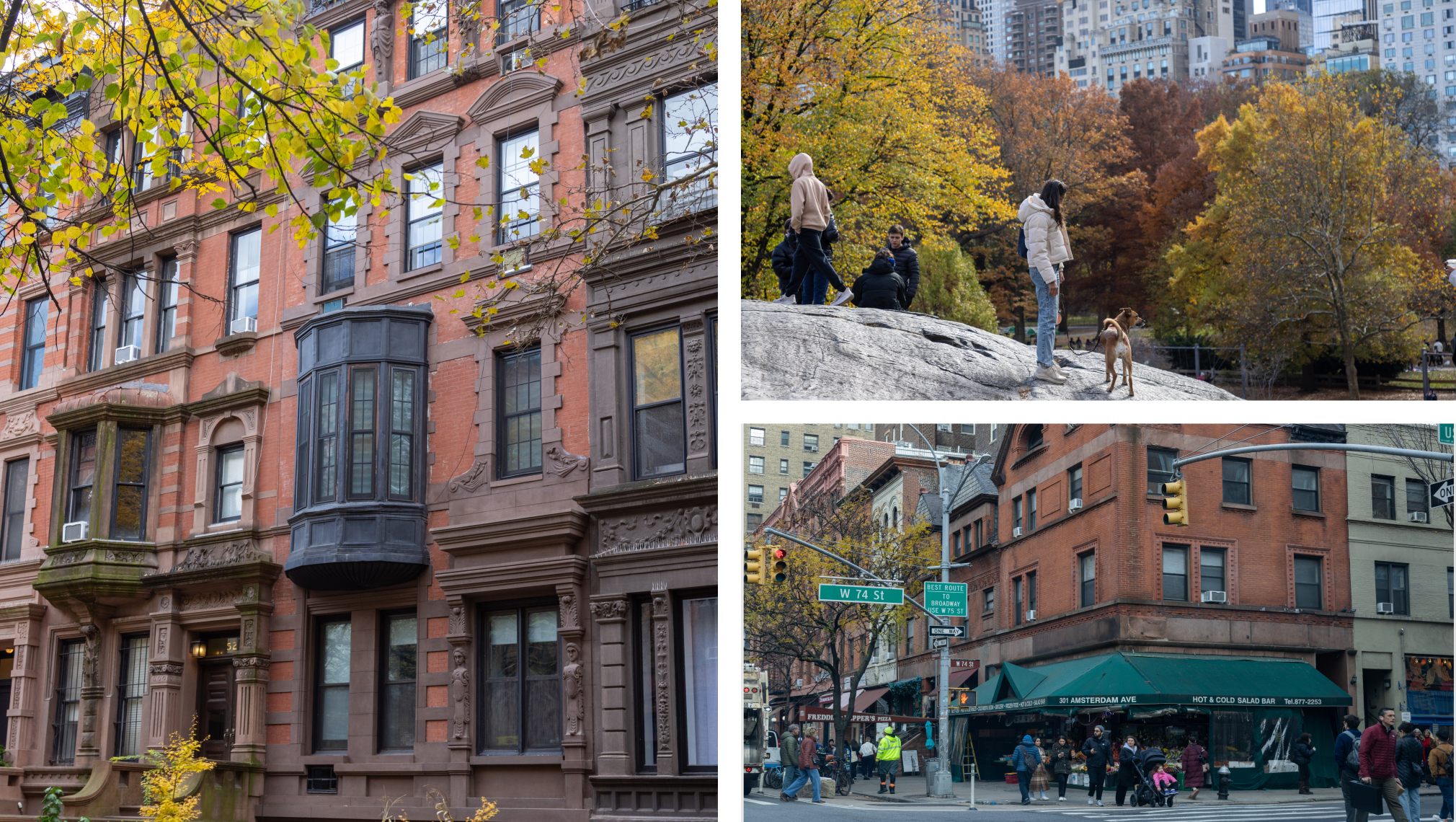
The Upper West Side is a residential-leaning neighborhood in Manhattan, roughly stretching from 59th Street to 110th Street, with Central Park to the east and Riverside Park/the Hudson River to the west. It’s known for its mix of pre-war co-ops and condos, classic brownstones, tree-lined streets, and a more laid-back, neighborhood-oriented vibe than many other parts of Manhattan.
The neighborhood offers city-wide convenience — excellent subway and bus access — while also giving residents quieter streets, access to major green space, and a comfortable urban lifestyle that balances calm with culture.
Upper West Side key takeaways
- Typical home value: $1,325,279
- 1-year value change: +3.2%
- For sale inventory: 890
- Median asking rent: $4,800
(Data through October 31, 2025)
Tottenville
Staten Island is generally considered a quiet corner of the New York City boroughs, thanks to its suburban feel and waterfront location — and Tottenville, on the lower part of the island, delivers on that serenity. The neighborhood is full of detached single-family homes, small apartment complexes and townhouses. Tottenville is also home to Conference House Park and Tottenville Beach, both of which offer outdoor spaces and waterfront access.
Tottenville residents remain close to the Staten Island Railway service, with access to St. George Terminal for ferry connections to Manhattan, and several bus routes to other island neighborhoods.
Tottenville key takeaways
- Typical home value: $814,378
- 1-year value change: +1.8%
- For sale inventory: 31
(Data through October 31, 2025)
How to choose a neighborhood in New York City
Choosing where to live in New York comes down to your priorities. Begin by setting your budget, then explore neighborhoods that align with how you like to spend your time. Zillow can help you in your home search with resources and filters to narrow down housing by price, bedrooms, commute times, views and more. You can also partner with a local real estate agent in New York to help you choose your ideal neighborhood.
Here’s a summary of the best New York neighborhoods for:
- Affordability and value: Consider Forest Hills, Riverdale, and Washington Heights,, where housing costs are lower but amenities abound.
- Lifestyle and community: Look to Astoria, St. George or Downtown Brooklyn, which combine walkable streets, local shops and cultural attractions with a strong sense of neighborhood identity.
- Luxury and high-end living: Manhattan offers plenty of upscale neighborhoods. The Upper East Side, Dumbo, Carroll Gardens, Hudson Yards and Tribeca deliver premium residences, world-class dining and iconic views for those seeking the full luxury experience.
- Schools and higher education: Battery Park City, Brooklyn Heights and Morningside Heights provide top-rated schools, historic architecture and access to academic and cultural institutions.
- Quiet living: Morningside Heights, the Upper East Side and Tottenville offer tree-lined streets, parks and a calmer pace while staying connected to the city.
Explore other New York City neighborhoods
Photos by Zillow Listing Media Services
How much home can you afford?
At Zillow Home Loans, we can pre-qualify you in as little as 5 minutes, with no impact to your credit score.
Zillow Home Loans, NMLS # 10287. Equal Housing Lender
Get pre-qualifiedA great agent makes all the difference
A local agent has the inside scoop on your market and can guide you through the buying process from start to finish.
Learn moreRelated Articles
Download the Zillow App
Don’t miss out on the right home for you — browse up-to-date listings, refine your search and more.
Download the free app