Black-White Homeownership Gap Narrows During Pandemic

March 16, 2023
Written by Treva Tam
Though the recent housing market has seen gains in both Black homeownership and Black home values, Black households still face significant barriers to homeownership compared to White households.
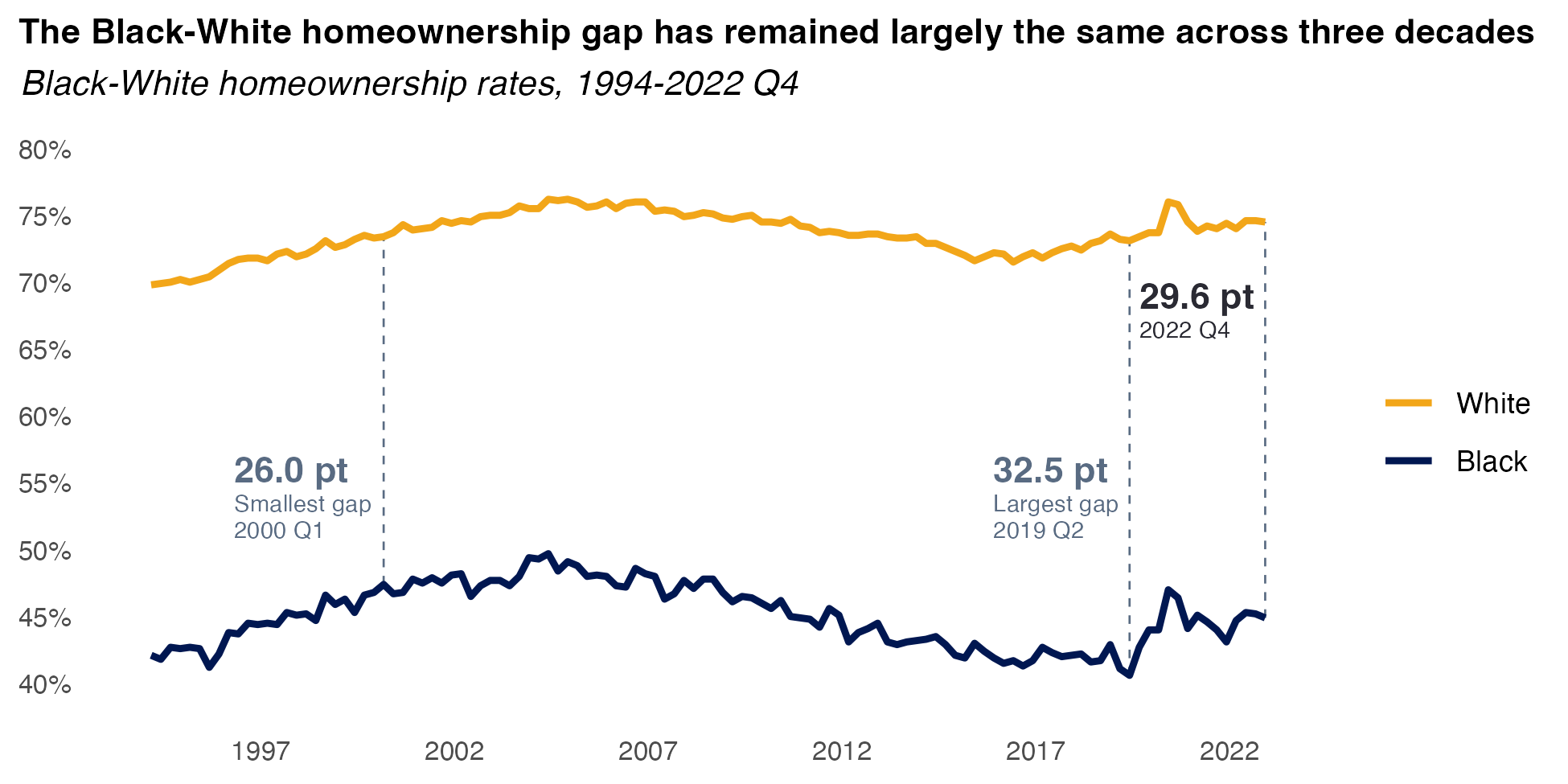
According to the latest Housing Vacancy Survey, the Black-White homeownership gap has shown little evidence of shrinking across three decades. Between 1994 to 2022, a significantly larger proportion of White households than Black households owned their homes. White homeownership remained above 70% while Black homeownership never exceeded 50%. In 2019 Q4, the White homeownership rate was 32.5 percentage points higher than Black homeownership, the largest it has been since 1994. However, the data does suggest a more recent narrowing of the gap during the COVID-19 pandemic.
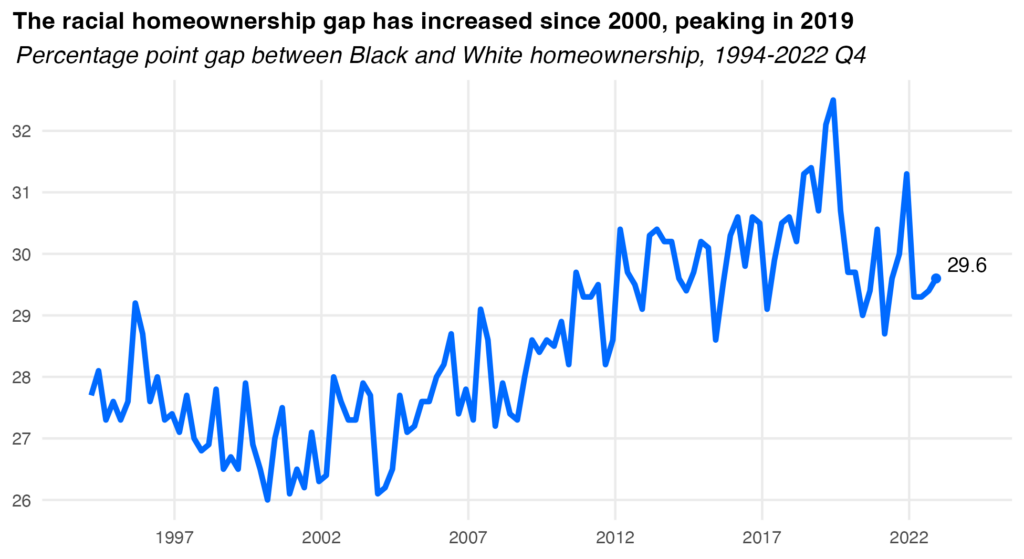
The Homeownership Gap During the Pandemic
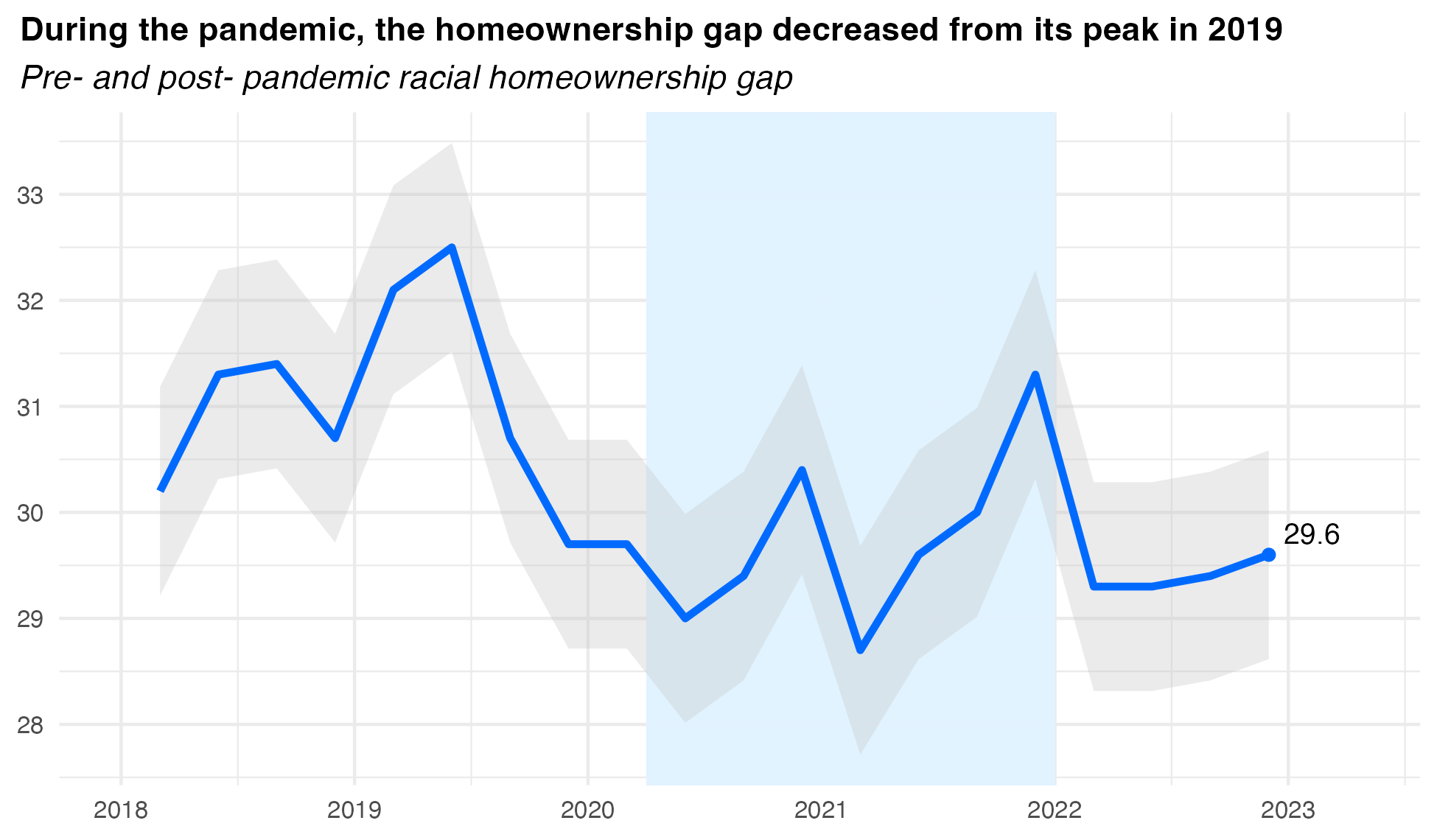
Though the racial homeownership gap is still notably wider than it was before 2010, the pandemic saw the beginnings of the homeownership gap narrowing. The wide racial disparity between Black and White homeownership in 2018 and 2019 does seem to drop dramatically in 2020. While this decrease can be attributed to limitations of data collection in Census surveys during the pandemic, the sustained lower percentage point gap, especially in 2022, is hopeful. In 2022 Q4, the gap had lessened to 29.6 percentage points from the peak of 32.5 in 2019. Still, there is a long way to go to close the Black-White homeownership gap, especially in the suburbs.
 Black-White homeownership across Urban, Suburban, and Rural Neighborhoods
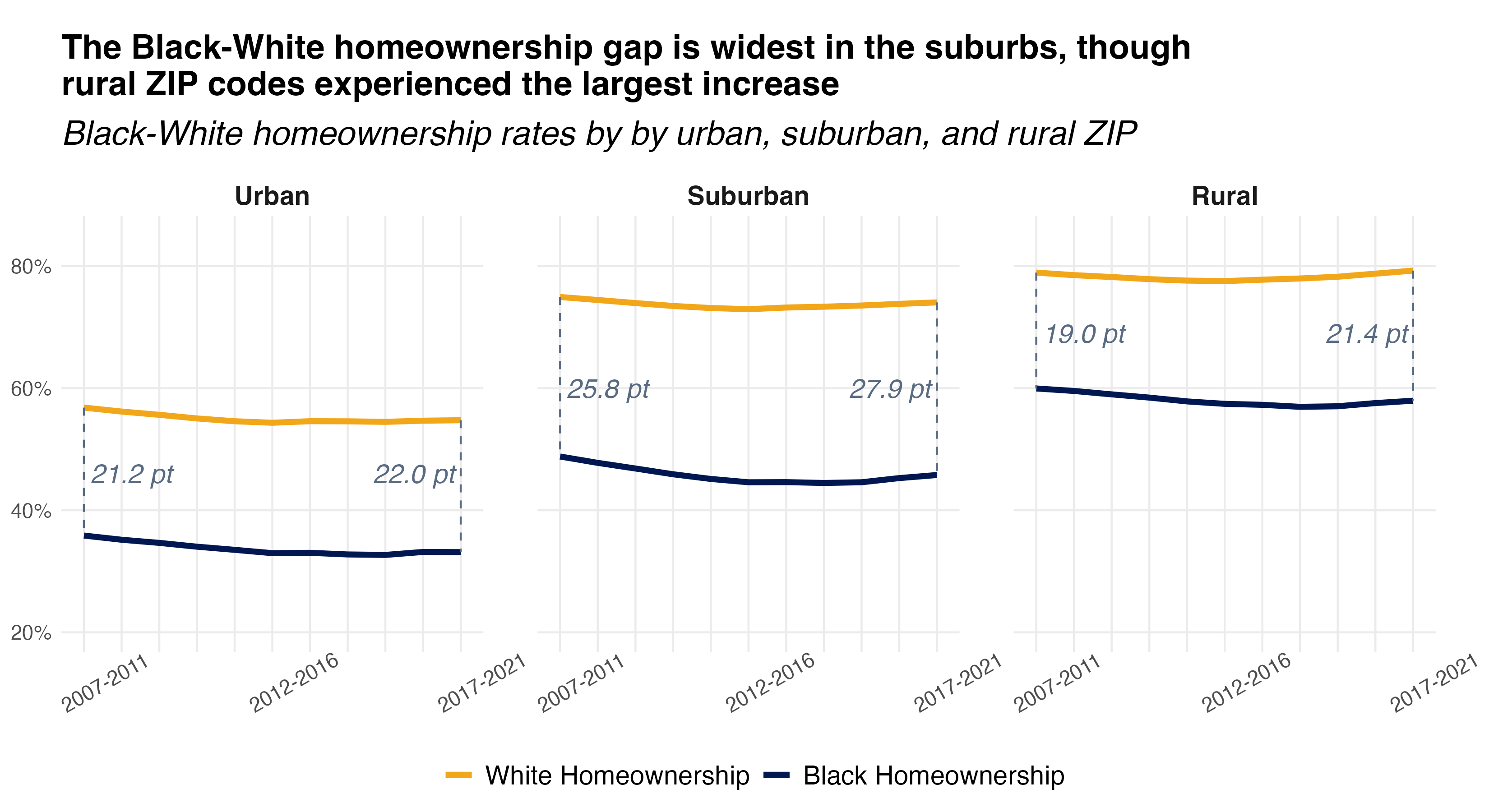
The gap in Black-White homeownership rates is largest in the suburbs, though the past decade has seen a widening of the homeownership gap across all urban, suburban, and rural ZIP codes. Historically, Black families have struggled to own homes in the suburbs. The creation of suburbs often involved coordinated effort by multiple levels of government, the real estate industry, and banks as well as individual families, neighborhood associations, and communities to exclude Black neighbors. And the lasting effects of these barriers on Black suburban homeownership remain evident today.
According to the 5-year American Community Surveys from 2007-2011 to 2017-2021, the racial homeownership gap has always been larger in suburban ZIP codes than in urban and rural ZIP codes. In 2017-2021, the suburban homeownership gap (at 27.9 percentage points) was 6 points larger than the urban gap (at 22 points) and 6.5 points larger than the rural gap (at 21.4 points). However, in all ZIP codes, the gap between Black and White homeownership has widened over time. The urban homeownership gap increased from 21.2 points in 2007-2011 to 22 points in 2017-2021. The suburban homeownership gap increased from 25.8 points to 27.9 points. In rural ZIP codes, the gap increased from 19 points to 21.4 points - the largest increase at 2.4 percentage points.
Homeownership is often viewed as a pathway to the American dream and a mechanism to pass along intergenerational wealth. However, the decades-long gap between Black and White homeownership gives evidence to the persistent hurdles faced by Black families, especially in suburban homeownership. It is vital to address the housing barriers that will reduce the racial homeownership gap.
Sign up for Zillow Research updates
Subscribe to receive weekly emails for the latest Zillow research, weekly housing data, market insights and more.
Related Articles

Research in your inbox
Get the latest housing data and analysis from Zillow's economists — delivered when the numbers update.

