July Case-Shiller Results: Home Prices Still Gaining
The biggest gains in recent months have been in the Pacific Northwest, with Dallas and Denver also experiencing rapid home price growth. Las Vegas, which was hard hit during the housing bust, posted the third fastest increase in the year through July.

September 26, 2017
Written by Svenja Gudell
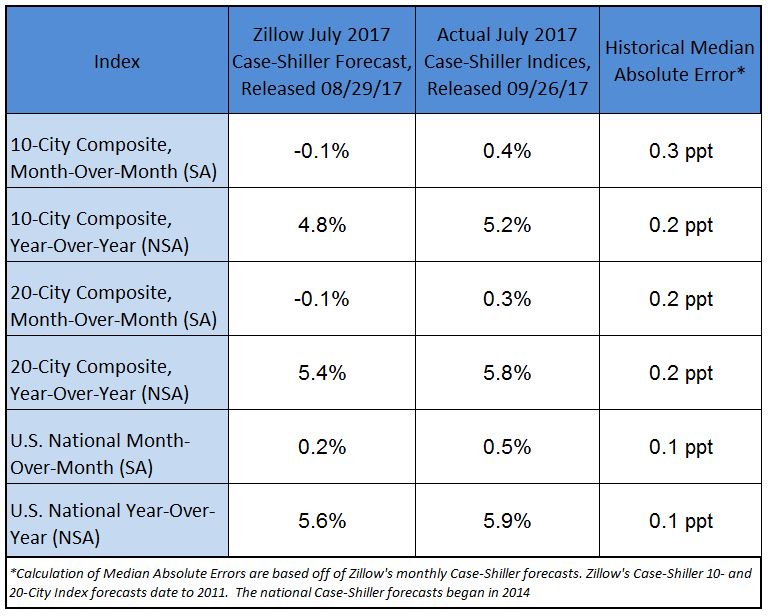
Case-Shiller’s U.S. National Index for home prices again showed stronger growth than expected in July, gaining 0.5 percent (seasonally adjusted) from June and 5.9 percent (not seasonally adjusted) year-over-year. The biggest gains in recent months have been in the Pacific Northwest, with Dallas and Denver also experiencing rapid home price growth. Las Vegas, which was hard hit during the housing bust, posted the third fastest increase in the year through July.
The 10-city index climbed 0.4 percent from June to July and rose 5.2 percent from a year earlier, while the 20-city index gained 0.3 percent month-over-month and increased 5.8 percent from a year ago. Below are Zillow’s forecasts alongside the results and our historical median absolute error for each index.
The U.S. housing market entered a strange kind of twilight zone over the summer, in which home prices kept rising steadily, but actual home sales activity largely leveled off at fairly underwhelming levels. The reason for both is the same: There is a huge shortage of homes actually available to buy relative to the amount of demand from home buyers out there. When the number of homes to buy is low, the number of closed home sales will also be low, and when supply is low, but demand is high, prices inevitably go up. It sets up a situation in which the housing market looks largely healthy from a 50,000-foot view. Jobs are relatively plentiful and wages are growing modestly; affordability – at least on paper – looks good, thanks largely to very low mortgage interest rates; and home prices themselves show no signs of declining any time soon. But on the ground, the situation is much different, especially for younger, first-time buyers and/or buyers of more modest means. Supply is low in general, but half of what is available to buy is priced in the top one-third of the market. This only stiffens competition at the entry and mid-level segments, which pushes prices up faster and actually contributes to quickly worsening affordability for these buyers. It’s certainly a great time to be a home seller. But when so many sellers need to then turn around and become buyers, the decision to list a home for sale and willingly enter that buying fray can feel like a no-win situation.
Sign up for Zillow Research updates
Subscribe to receive weekly emails for the latest Zillow research, weekly housing data, market insights and more.
Related Articles



Research in your inbox
Get the latest housing data and analysis from Zillow's economists — delivered when the numbers update.

