
Written by Jennifer Lyons on April 11, 2026
Reviewed by Jessica Rapp, Edited by Suzanne De Vita
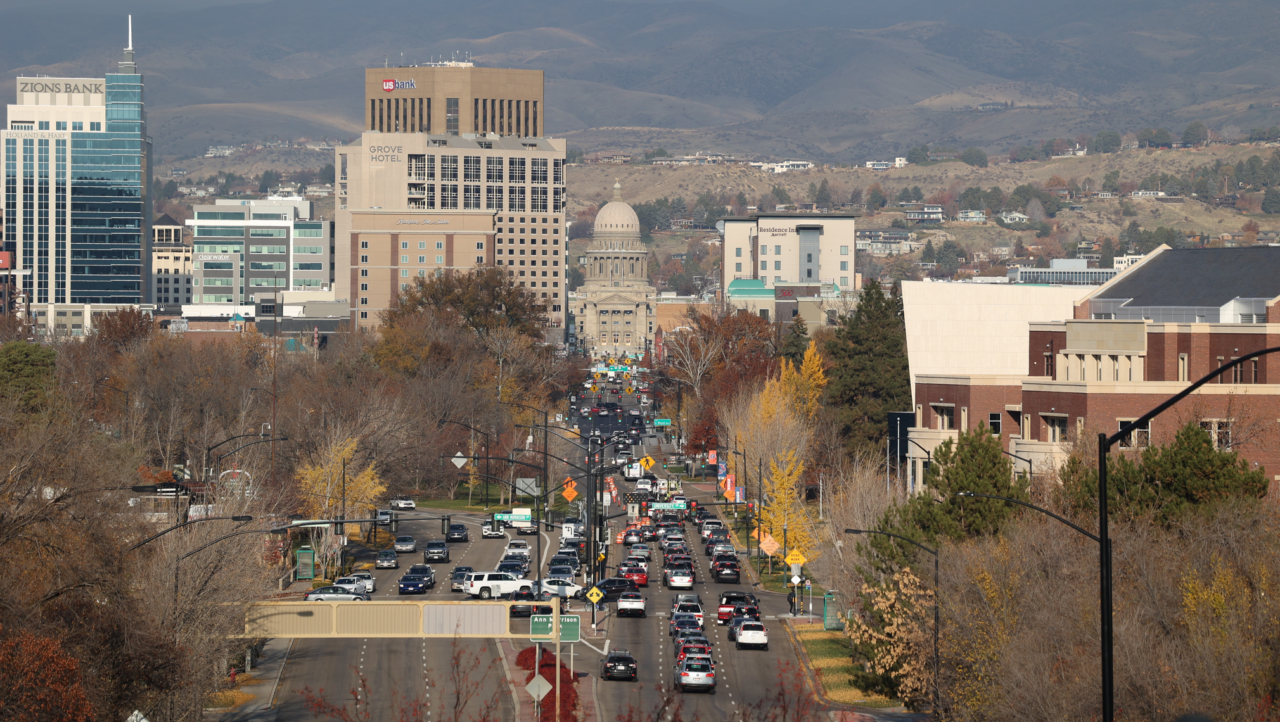
Boise, Idaho is a good place to live for those seeking access to outdoor recreation (like camping, hiking and rafting), a booming job market and a growing cultural scene. The city’s population is slow growing despite being the most populous metropolitan area in Idaho. With incomes on the rise and new homeowner affordability improving, now may be the ideal time to consider a move to Boise. Here’s what to know about the city of Boise, from cost of living to jobs, weather and more.
What to consider before moving to Boise:
- Cost of living
- Job market and economy
- Lifestyle and culture
- Weather and climate
- Commute and public transit
- Pros and cons
- Compared to living in Denver
- How to decide
Cost of living
To comfortably afford living in Boise, the recommended approach is to keep your housing costs less than 30% of your income. This rule of thumb applies whether you plan to rent or buy a home in Boise to keep housing costs affordable.
Renting a home: The average monthly rent in Boise is $1,758, according to the February 2026 Zillow Observed Rent Index. You’d need an annual income of $70,323 to afford to rent in Boise and remain within the 30% threshold — comparable to the annual income needed to afford the typical U.S. rent.
Buying a home: The average home value in Boise is $485,780 as of February 2026, according to the Zillow Home Value Index. With a 20% down payment, the mortgage payment on the average home in Boise is $2,342. To afford the payments and stay within the 30% threshold, you’d need an annual income of $111,333. That’s 19% higher than the income needed to afford the typical U.S. home.
When deciding if a home in Boise will be affordable for you, weigh the cost of living with your additional monthly expenses like utilities on an apartment. The total monthly payment for owning a home in Boise when you include the mortgage, insurance costs, property taxes, and maintenance costs is $2,783. Use Zillow’s Rent vs Buy Calculator to estimate whether buying a home in Boise or renting works best based on your financial situation.
| Boise | National | How Boise compares | |
| Typical mortgage payment | $2,342 | $1,738 | 34.7% higher income needed |
| Average monthly rent | $1,758 | $1,895 | 8% lower income needed |
*Data source: All housing costs metrics are based on Zillow Research data using Zillow’s Affordability Metrics.
Job market and economy
Boise’s population has grown considerably in the past several years, and the city’s economy along with it. The boom has been fueled by consistent job creation and wage growth, low unemployment and its mix of expanding and long-standing industries, including technology, agriculture and healthcare.
- Income: The typical income in Boise City is $94,344 as of February 2026, according to Zillow Research.
- Common professions: In Boise, the most common professions are office and administrative support, sales, transportation, food preparation and serving and healthcare and management, according to BLS.
- Job growth: The Boise job market is outpacing national averages, with new residents adding to the labor force — creating robust wage growth and low unemployment.
Lifestyle and culture
The lifestyle in Boise is full of outdoor adventure, cultural institutions and diverse food and entertainment options. Downtown Boise is home to local art, events and eateries, making it a lively area to explore.
- Outdoorsy culture: Boise’s unique geography puts it between the rolling foothills of the Boise Mountains to the north and the flatter plains stretching south, giving residents easy access to both rugged trails and open spaces. The city’s extensive River Greenbelt winds along the Boise River, offering miles of scenic paths for walking, running, and especially biking, which is deeply ingrained in the local culture. From riding the Ridge to Rivers trail network in the foothills to floating the Boise River or hitting the slopes at nearby Bogus Basin, outdoor adventure is part of everyday life in Boise.
- Eclectic food scene: Boise’s culinary offerings include local farm-to-table restaurants, global cuisines, craft breweries and Basque Block — a downtown neighborhood that celebrates the city’s cultural heritage through food, museums and more. The city is also building a reputation for its food trucks.
- Vibrant arts and music scene: From the ever-changing street murals at Freak Alley to performances at the historic Egyptian Theatre and the Boise Philharmonic, Boise offers a variety of music and art. The city hosts signature events like Treefort Music Fest, drawing both local and national talent, while museums such as the Boise Art Museum and the Basque Museum & Cultural Center offer year-round exhibitions and cultural programming that enrich community life.
- Regular events and festivals: There’s always something happening in Boise, from summer concert series and marathons to the Idaho Shakespeare Festival and the New Year’s Eve Potato Drop.
Connect with a local real estate agent in Boise to learn more about the area.
Weather and climate
Boise has a semi-arid climate with four seasons and generally dry conditions. The summers are hot, with abundant sunshine, while winters are colder, with moderate snowfall and periods below freezing. Most of the precipitation here falls from November through May.
- Warm, sunny summers: Boise’s summers are typically hot and dry, with average high temperatures reaching the 80s and low 90s in June, July, and August, and occasional days climbing near or above 100 degrees Fahrenheit. Low humidity and abundant sunshine make the heat feel more comfortable than in more humid regions, and evening temperatures often drop into the 50s and 60s, keeping nights relatively cool. Boise also receives very little rainfall in summer, especially in July and August.
- Cool to cold winters: Winters in Boise are cool to cold but generally milder than many northern inland cities, with average highs in the 30s and 40s and lows in the 20s, and only occasional nights below zero. Snow does fall, but it’s moderate, averaging around 15–20 inches per year, and long stretches of sub‑freezing temperatures are uncommon.
- Weather risk: Boise can experience thunderstorms, heavy rain and flash flooding, especially when strong systems move inland, where flood watches and warnings are issued as needed. The region also sees fire weather advisories and Red Flag warnings during dry, warm and windy conditions that elevate wildfire risk.
Commute and public transit
Boise’s transportation system is still largely car-centric, with most workers driving to work rather than relying on transit. At the same time, the city is highly connected to its surrounding suburbs, enabling a “5-mile lifestyle” where residents can live, work, and play across nearby communities like Meridian, Eagle, and Garden City without long commutes. This connectivity supports convenient access to shopping, recreation, and cultural amenities throughout the Boise metro.
- Best way to get around: The most common method of transportation for Boise commuters is driving, according to Census data. Most commuters drive by themselves (71.5%), and some carpool (7.1%).
- Average commute time: The average commute time in Boise is 20 minutes, according to Census data. That’s on par with similarly-sized cities like Salt Lake City, but shorter than in other major metros like Denver and Portland, Oregon.
- Traffic conditions: As Boise’s population has grown, the congestion has increased on key routes around the city. Still, the traffic here is relatively light.
- Road conditions: Boise’s roads and highways are generally well-maintained, though the city’s rapid growth has led to ongoing construction and maintenance projects to improve capacity and safety.
- Rideshare availability: Uber and Lyft both operate in Boise and the broader Treasure Valley, and are widely used for on‑demand rides within and around the city, including designated pick‑up/drop‑off areas at the Boise Airport. In addition to traditional rideshares, programs like Commuteride offer pooled van and carpool options to help reduce solo driving, and City Go Boise supports planning and access to transit, rideshare connections, scooters, and other commuting tools. Dockless e‑scooters are also available in Boise via shared mobility programs, providing another flexible option for short trips around the city.
- Public transit availability: The primary public transit option in Boise is the ValleyRide bus network, operated by Valley Regional Transit, which serves parts of Boise, Meridian, and Nampa. Service frequency and coverage are more limited than in larger cities, and the region currently lacks a rail or subway system. However, the city is actively exploring ways to expand transit options through initiatives like “Movement for Everyone”, including plans to potentially bring back rail service to improve connectivity and reduce car dependency.
- Walkability: You’ll need a car to get around most of Boise and its surrounding areas, but you can walk in some neighborhoods, including Downtown Boise and Depot Bench. Boise overall has a Walk Score of 38.
Pros and cons of living in Boise
From sun-soaked summers to a growing job market, Boise has a lot to offer, but like any place, it comes with trade-offs. Here’s a closer look at what makes Boise appealing and what challenges you might encounter.
Pros
- Access to natural surroundings: The outdoors are a regular part of life in Boise, as the city is in proximity to the Boise River, the Boise Mountains and extensive trail networks.
- Growing job market: Newcomers continue to flock to Boise, and those gains have been reflected in its growing economy. The major sectors here include technology, healthcare, agriculture and professional services.
- Vibrant arts and culture: Boise’s cultural scene includes numerous festivals, museums, public art and nightlife, especially downtown.
- Seasons and climate: Boise experiences distinct seasons, with hot, dry summers ideal for outdoor recreation and cool winters that bring occasional snow and winter sports opportunities nearby. Spring and fall offer mild temperatures, colorful landscapes, and perfect conditions for hiking, biking, and enjoying the city’s River Greenbelt. While summers can get very warm, residents enjoy the variety and balance of weather throughout the year.
- Affordable rent: While home prices have risen, monthly rents in Boise remain below the national average, making it a more affordable option for renters compared with many larger U.S. metro areas.
Cons
- Car-dependent: To get to work or run errands in Boise, you’ll likely need a car — the city as a whole isn’t very walkable.
- Rising housing costs: Home prices and rents have increased significantly in recent years, driven by population growth.
- Hot and dry summers: July and August are especially hot in Boise, with temperatures in the 90s and even 100 degrees some days. That raises your cooling costs and makes it more challenging to enjoy the outdoors comfortably.
- Limited public transit: Boise’s public transportation system isn’t as robust as that of other cities. There are buses, but the coverage and schedules vary.
- Rapid growth challenges: Boise’s immense population growth in recent years has put more demand on the city’s infrastructure and services. That can affect everything from housing inventory to road quality.
Is Boise better than Denver?
Boise is a smaller city than Denver with a friendly community vibe and lower housing costs. Denver is much larger than Boise offering more diverse job opportunities, cultural amenities and educational institutions, but with heavier traffic. Here are how these two cities compare to help you decide whether Boise or Denver is more ideal for you based on your needs.
- Cost of living: In Boise, you’d need an income of $70,323 to afford rent and $111,333 to purchase a home. In Denver, you’d need $73,750 to comfortably afford rent, and $140,586 to buy. While rent is nearly 4.75% less expensive in Boise than Denver, buying a home is about 23% cheaper in Boise than in Denver.
- Job market and economy: Compared to Boise, Denver has a larger, more diversified economy across tech, energy, aerospace, healthcare and finance. The annual median salary is higher in Denver at $61,110 compared to Boise at $47,580. However, Boise’s economy is growing rapidly particularly in tech and healthcare.
- Lifestyle and culture: Denver and Boise are both in Rocky Mountain territory, so the landscapes in and around each city cater well to outdoor enthusiasts. Over the years, they’ve each been named a “Bike-Friendly Community.” Denver has more cultural amenities and entertainment options, though, including pro sports teams.
- Schools and higher education: Denver has hundreds of public schools with a wide range of ratings, including several highly rated options like Polaris and Challenge School. Boise’s smaller system has fewer schools but a strong share of top-rated ones, including Highlands and Collister Elementary. Both cities also host major universities — Denver with the University of Denver and University of Colorado Denver, and Boise with Boise State University.
- Weather and climate: Boise experiences hot, dry summers and cold winters with modest snowfall, averaging about 20 inches of snow per year in the city itself. The surrounding foothills and mountains receive much more at higher elevation. In contrast, Denver’s winter snow totals are noticeably higher, with a long‑term average seasonal accumulation around 55-57 inches or more annually, reflecting the city’s proximity to mountain storm systems and higher elevation. Both cities see four distinct seasons and plenty of sunny days, but Denver’s winters tend to be snowier and can include heavier winter storms, while Boise’s snow often melts quickly in the valley’s milder winter conditions.
- Commute and public transit: The average commute time in Denver is about 5 minutes longer than it is in Boise, and Denver is more congested overall. Denver offers public transit via buses and a light rail system; Boise only offers buses.
How to decide if living in Boise is right for you
Boise is an outdoor-centric city that is growing in popularity. The distinct four seasons make it ideal for those who enjoy year-round consistency, while the community caters to a wide range of lifestyles from music and food lovers to winter and summer sports enthusiasts. Whether Boise is the right city for you depends on your lifestyle and needs. Weight your priorities, compare the cost of living and research neighborhoods in Boise to help you narrow down your options.
- Prioritize your needs: Boise could be a great fit for you if you like to be active or live your life outdoors. The city’s job market is growing, especially in technology and healthcare, but its wages aren’t as high as some other larger cities.
- Compare cost of living: To keep your rent or mortgage payment less than 30% of your income, you’ll need an annual income of at least $70,323 to comfortably afford rent in Boise, or at least $111,333 to buy a home with a 20% down payment.
- Research neighborhoods: Each neighborhood in Boise has its own vibe and amenities. Downtown Boise is vibrant and walkable, full of restaurants, shops, and cultural attractions. The North End features historic homes and easy access to parks and trails. East Boise and Southeast Boise are more suburban, offering newer developments and larger yards. West Boise combines residential and commercial areas with convenient shopping options.
- Explore homes for sale: You can find homes for sale in Boise on Zillow and narrow down your options by number of bedrooms, square footage, new construction listings and more.
How much home can you afford?
At Zillow Home Loans, we can pre-qualify you in as little as 5 minutes, with no impact to your credit score.
Zillow Home Loans, NMLS # 10287. Equal Housing Lender
Get pre-qualifiedA great agent makes all the difference
A local agent has the inside scoop on your market and can guide you through the buying process from start to finish.
Learn moreRelated Articles

Download the Zillow App
Don’t miss out on the right home for you — browse up-to-date listings, refine your search and more.
Download the free app