
Written by Jennifer Lyons on May 11, 2026
Reviewed by Alycia Lucio, Edited by Suzanne De Vita
San Antonio, Texas is a city where deep history, fast-growing industries, and a laid-back lifestyle all coexist in a way that's pretty rare. The more manageable cost of living makes San Antonio a good place to live compared to most other major cities of its size. There's a genuine sense of community that's hard to find in bigger, faster-paced metros, adding to the city’s allure. While the sunshine is plentiful, the heat may be unbearable for some.
Whether you're drawn by affordability, job opportunities, culture, or just the promise of warmer winters, San Antonio has a lot going for it. Here's what to know about living in San Antonio to help you decide if it's the right place to live for you.
What to consider before moving to San Antonio:
- Cost of living
- Job market and economy
- Lifestyle and culture
- Weather and climate
- Commute and public transit
- Pros and cons
- Compared to living in Austin
- How to decide
Cost of living
The cost of living in San Antonio is based on the cost of housing in relation to your income. To comfortably afford living in San Antonio, the recommended approach is to keep your housing costs to less than 30% of your income. This rule of thumb applies whether you plan to rent or buy a home in San Antonio.
Renting a home: The monthly cost of rent in San Antonio is $1,398, according to the April 2026 Zillow Observed Rent Index. You'd need an annual income of $55,904 to afford to rent in San Antonio and remain within the 30% threshold — about 28% lower than the annual income needed to afford the typical U.S. rent.
The typical home value in San Antonio is $280,170 as of April 2026, according to the Zillow Home Value Index. With a 20% down payment, the total mortgage payment on the average home in San Antonio is $1,392. To afford the payments and stay within the 30% threshold, you'd need an annual income of $81,243. That's about 17% lower than the income needed to afford the typical U.S. home.
When deciding if a home in San Antonio will be affordable for you, weigh the cost of living alongside your additional monthly expenses like utilities on an apartment. The total monthly payment for owning a home in San Antonio — including the mortgage, insurance, property taxes, and maintenance costs — comes to $2,031. Use Zillow's Rent vs. Buy Calculator to estimate whether buying or continuing to rent works best for your financial situation.
| San Antonio | National | How San Antonio compares | |
| Typical mortgage payment | $1,392 | $1,829 | 17% lower income needed |
| Average monthly rent | $1,398 | $1,930 | 28% lower income needed |
*Data source: All housing costs metrics are based on Zillow Research data using Zillow’s Affordability Metrics.
Job market and economy
Backed by a strong military presence, a massive healthcare system and expanding tech and infrastructure investment, San Antonio offers many options for job seekers.
- Income: The typical household income in San Antonio is $82,910 as of April 2026, according to Zillow Research.
- Common professions: Healthcare, retail, management and government roles dominate the local workforce, according to BLS. Registered nurses, retail sales staff, cashiers, and general managers are among the most common occupations, with fast-growing opportunities in aerospace, construction, healthcare, oil and gas and IT and cybersecurity.
- Job growth: San Antonio’s job market outperformed national averages in 2025, with unemployment at 4.3% as of January 2026. Moreover, San Antonio has emerged as a growing center for technology and cybersecurity, supported in part by the city’s longstanding military presence.
Lifestyle and culture
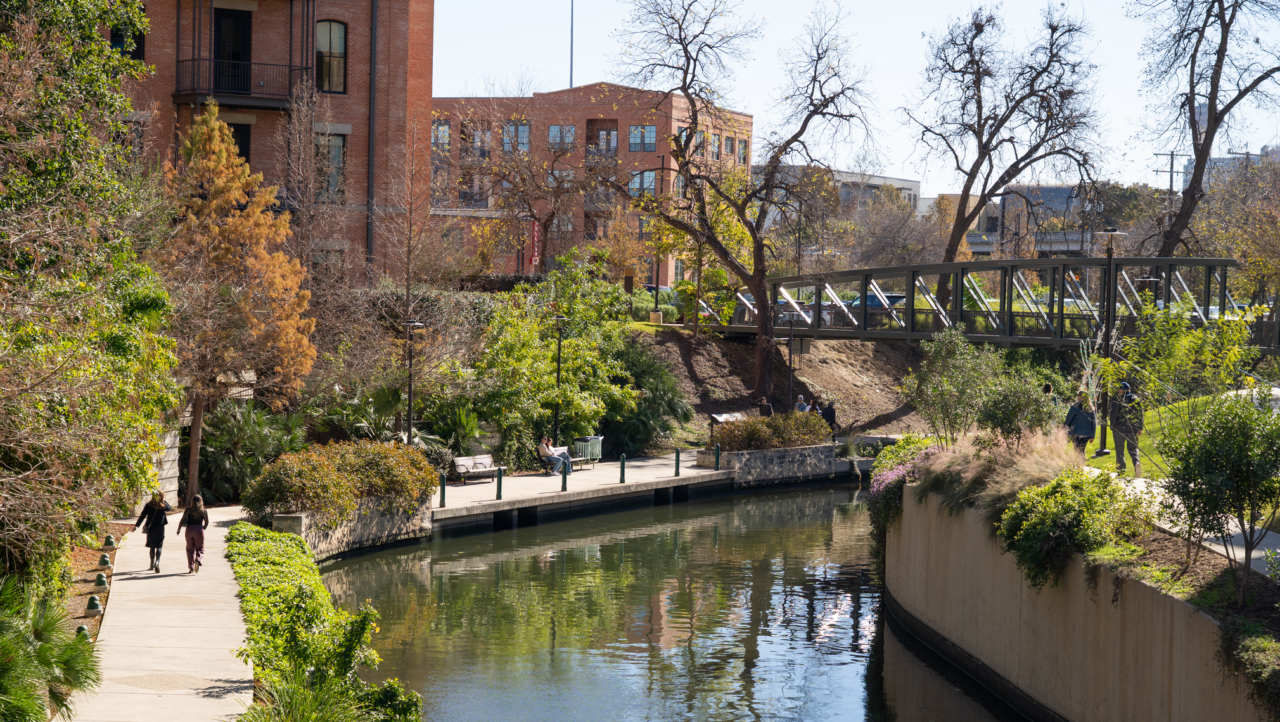
San Antonio’s lifestyle is deeply rooted in its cultural heritage. The city plays host to many celebratory festivals and offers myriad food and entertainment options, from neighborhood Tex-Mex spots to live music and sports. It’s also built for enjoying the outdoors, including at the San Antonio River Walk, on trails and at nearby natural attractions.
- Historic highlights: San Antonio’s storied past is reflected in its many landmarks, including the famed River Walk and the Alamo; the UNESCO World Heritage San Antonio Missions; Tower of the Americas; and the Japanese Tea Garden.
- Attractions and amusements: Big attractions make family weekends easy to plan, with Six Flags Fiesta Texas, SeaWorld San Antonio, and the San Antonio Zoo offering year-round entertainment for all ages.
- Celebrations and food: Tex-Mex and German food are a way of life in the area, but the food scene runs deeper, thanks to the Culinary Institute of America campus and a packed festival calendar led by Fiesta San Antonio, an 11-day city-wide celebration that takes over every spring.
- Sports: Team loyalty runs strong in San Antonio, with passionate support for the Spurs, the Missions baseball team and San Antonio FC.
- Outdoor recreation: With warm weather comes lots of opportunities to get outside, including paddleboarding along the city’s waterways or walking or biking on the trails. There’s also lots to explore outside the city, including Cascade Caverns and Natural Bridge Caverns.
Connect with a local real estate agent in San Antonio to learn more about the area.
Weather and climate
When it comes to weather, San Antonio is sunny and warm most of the year, with long summers that can get hot and mild, shorter winters. The temperatures feel more comfortable in the spring and fall, but it’s also common to see rain and quick weather shifts during those seasons. You’ll rarely see snow.
- Hot, humid summers: San Antonio summers are hot and humid, often heating up in May and running through September, with max temperatures exceeding 90 degrees Fahrenheit, according to NOAA. The mornings tend to feel stickier with high humidity, but that often drops down by the afternoon. There are often thunderstorms throughout the summer months, as well.
- Mild winters: Winters are generally short and manageable, and snow is rare, keeping winters more mild than harsh. The average temperature here is between 53 and 55 degrees Fahrenheit from December to February, with the lowest temps typically seen in January, according to NOAA.
- Weather risk: The most common weather risks in San Antonio are severe heat and flash flooding. While it’s rare for the city to experience a direct hit from a hurricane, the remnants of tropical systems can move through and bring intense rainfall, wind and occasional tornadoes.
Commute and public transit
San Antonio is mostly car-dependent, with average travel times staying manageable for a large metro. The city’s public transportation operator is VIA Metropolitan Transit, which offers an extensive bus network, though coverage varies by neighborhood.
- Best way to get around: The best way to get around in San Antonio is by car. The city as a whole isn’t very walkable, and the public transit system is limited to buses and some carpooling services.
- Average commute time: The average commute time in San Antonio is 25 minutes, according to Census data. Most workers (82%) drive themselves to their job.
- Traffic conditions: The traffic in San Antonio can be intense on major corridors like I-35 and Loop 410, but the city overall isn’t as congested as Dallas-Fort Worth or Houston.
- Road conditions: San Antonio’s roads are generally well maintained, but frequent construction and heavy traffic can lead to rough patches, uneven pavement and frequent potholes.
- Rideshare availability: Uber and Lyft are widely available throughout the city, including reliable 24/7 service at San Antonio International Airport. For shorter trips, VIA Link also offers on-demand curb-to-curb rides in select zones. Waymo has recently been introduced in the city, and there’s even a bike share program for those interested.
- Public transit availability: The public transportation in San Antonio is operated by VIA Metropolitan Transit, which offers a large bus network across the metro area. While there’s no rail or subway system, there are express and high-frequency bus routes to help connect key parts of the city.
- Walkability: San Antonio is largely car-dependent, but certain neighborhoods, like Five Points, are very walkable.
Pros and cons of living in San Antonio
Every city has tradeoffs, and San Antonio is no exception. The pros here include affordability and cultural amenities, while the cons center mostly on climate and transportation.
Pros
- More affordable cost of living: Buying or renting in San Antonio doesn't cost as much compared to other Texas cities, including Austin and Houston. According to Zillow, Austin's median home list price is about $556,000 as of March 2026 — nearly double what the median in San Antonio. Texas also doesn't have a state income tax, which makes that stretch even further.
- Strong cultural identity: San Antonio’s Hispanic heritage, along with influences from Native American, German, and military communities, shapes its food, festivals, architecture, and neighborhoods.
- Mild winters: The temperatures in winter rarely go below freezing, and the season itself is fairly short.
- Growing job market: San Antonio’s employment continues to trend up, thanks to key industries including healthcare, military, construction and tech.
- Plenty to see and do: Residents have access to amusement parks, cultural institutions, historic sites, sports venues, and year-round outdoor activities, creating a well-rounded lifestyle.
Cons
- Heat and humidity: The summer in San Antonio brings high temperatures up into the 90s (Fahrenheit) and humidity (especially in the mornings), which can take some getting used to.
- Traffic congestion: Major thoroughfares like Loop 410 and I-35 can get crowded, particularly during peak hours and when there’s construction.
- Property taxes: One thing worth knowing before you buy — property taxes in San Antonio run notably higher than the national average, typically falling between 2.0% and 2.9% of a home's assessed value. Compare that to the national effective rate of roughly 0.89% to 0.99%, and it's a gap that can catch buyers off guard, especially those relocating from slower-growth areas. Rising home values and local infrastructure needs have driven much of the increase, so it's a good idea to factor this into your budget early.
- Aging infrastructure: Some roads, drainage systems, and utilities are nearing the end of their lifecycle, requiring ongoing investment, time, and construction that can temporarily disrupt daily travel.
Is San Antonio better than Austin?
San Antonio and Austin offer very different versions of South-Central Texas living, even though they’re less than two hours apart. San Antonio is more affordable and laid-back, while Austin is faster-paced and pricier. Here’s how the two cities compare:
- Cost of living: Whether you live in San Antonio or Austin, housing is usually your largest cost of living expense. Zillow research shows keeping your rent or mortgage payment below 30% of your income is ideal for living comfortably. To comfortably afford to live in San Antonio, you'll need an income of at least $55,904 to rent or $81,243 to buy. That's lower than what you'd need to rent in Austin ($64,144), and also lower than what you'd need to buy there ($124,115) — a meaningful difference that adds up fast.
- Job market and economy: San Antonio's job market saw steady growth in 2025, with total nonfarm employment growing 1.4%, outpacing the national rate of 1.2%, according to the Federal Reserve Bank of Dallas. Austin outperforms San Antonio in some areas though: It’s the leading Texas metro for economic growth and has a lower unemployment rate.
- Schools and higher education: Austin has the edge when it comes to public education, with multiple nationally-recognized districts and schools. It’s also home to the University of Texas at Austin, ranked in the top 30 universities in the country by U.S. News & World Report. The quality of San Antonio’s schools varies considerably, with some schools rating well and others needing improvement. Like Austin, the city has a UT campus which has also been recognized by U.S. News.
- Weather and climate: San Antonio and Austin have a similar climate, with hot summers, mild winters and plenty of sunshine throughout the year. San Antonio is hotter and more humid overall, while Austin benefits from Hill Country breezes. Both cities experience occasional heavy rain, but neither faces extreme winter weather.
- Commute and public transit: Both cities have an average commute time of approximately 25 minutes, and most residents use a car to get around. Both cities have public transit options, too, though they’re mostly limited to buses. Neither city is especially walkable, but Austin has a more bike-friendly infrastructure.
How to decide if living in San Antonio is right for you
If lower housing costs, vibrant cultural hot spots, and that sweet Texas sunshine sound appealing, San Antonio might just check more boxes than you'd expect. It's a city with a lot of heart, and a lot to offer. Here are some things to help you decide if it could be the right fit for you:
- Prioritize your needs: San Antonio might be a good fit if you’re looking for affordability, a creative food scene or opportunities to spend time outdoors.
- Compare cost of living: Your housing expense makes up the majority of your cost of living in San Antonio. To keep your rent or mortgage payment less than 30% of your income, you’ll need an annual income of at least $55,904 to comfortably afford rent in San Antonio and $81,243 to buy a home with a 20% down payment.
- Research neighborhoods: San Antonio’s neighborhoods are as varied as its history, from the energy of downtown and the Pearl District to enclaves like Stone Oak, Alamo Heights and the Northwest Side.
- Explore homes for sale: You can browse homes for sale in San Antonio on Zillow and narrow your search by price, bedrooms, square footage or new construction to find the right fit for your lifestyle.
How much home can you afford?
At Zillow Home Loans, we can pre-qualify you in as little as 5 minutes, with no impact to your credit score.
Zillow Home Loans, NMLS # 10287. Equal Housing Lender
Get pre-qualifiedA great agent makes all the difference
A local agent has the inside scoop on your market and can guide you through the buying process from start to finish.
Learn moreRelated Articles


Download the Zillow App
Don’t miss out on the right home for you — browse up-to-date listings, refine your search and more.
Download the free app