The Pros and Cons of Renting vs. Buying a House
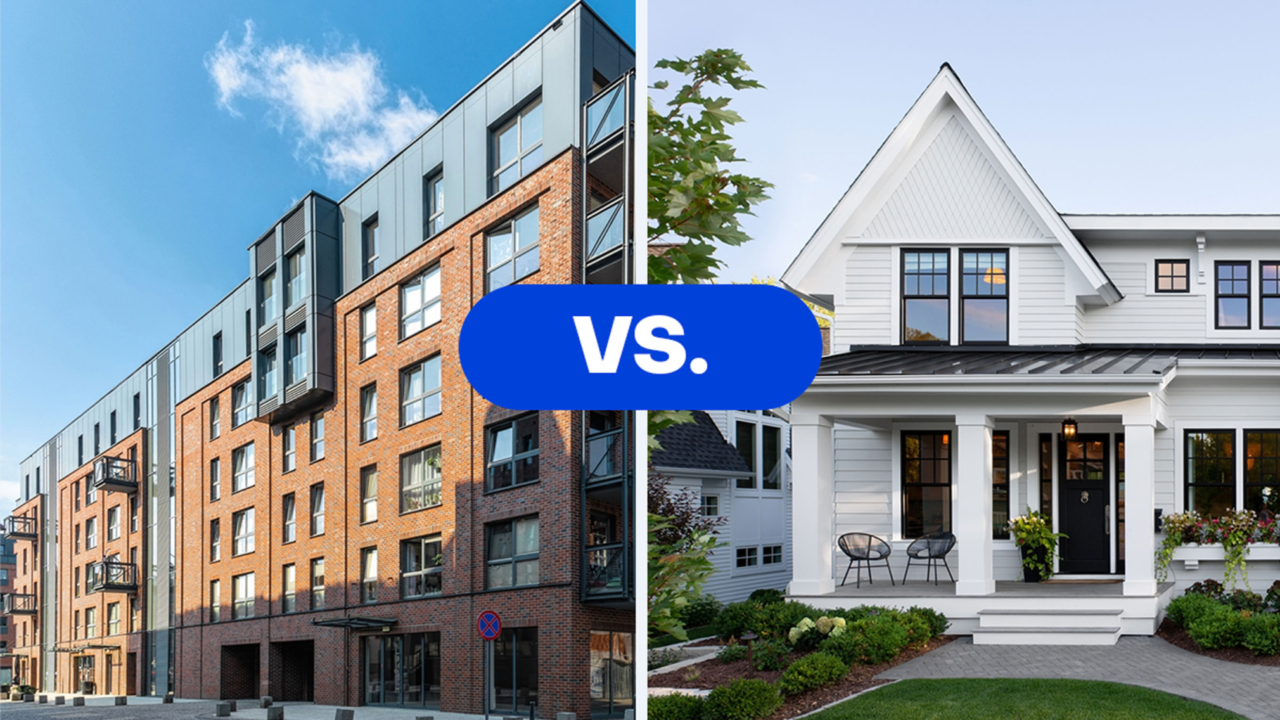
Not sure if you should buy a home in this market? These 14 pros and cons can help you decide.

Written by Grant Brissey on July 1, 2026
Reviewed by Orphe Divounguy, Edited by Suzanne De Vita
Whether you should buy or rent often comes down to one question: How long do you plan to stay?
Under current market conditions, buying the typical U.S. home starts to pay off after about six years — roughly 5.9 years with 5% down and 6.0 years with 20% down, according to recent Zillow research.
Tip: That payoff moment is called the breakeven point — when the financial benefits of owning catch up to and pass the benefits of renting.
But those national figures are an average; the equation also changes depending on where you live. In some places, you'll get to that breakeven point faster.
Among the 50 largest metros, Columbus, Memphis and Buffalo reach breakeven soonest. Buyers in those areas can hit the buy-versus-rent breakeven at roughly 3.5 to 4.2 years, depending on the down payment. But the math is considerably less forgiving in markets like San Francisco, San Jose and New Orleans, where renting comes out ahead even over a full 30-year horizon.
So before weighing the pros and cons below, it helps to know your timeline and your market. An agent who’s local to the area you’re targeting can help you understand the conditions there.
Here are some pros to each option to help you weigh your choices.
Pros to buying a home now
Even in today’s housing market, buying a home could be a smart move. Here are seven reasons why buying a home could benefit you more than renting:
You may be able to build equity
“Building equity” means that you increase your financial stake in the home over time. You can do that in two ways:
1) By paying down your mortgage over time.
2) By buying a home that eventually becomes worth more than you bought it for.
The difference between what you can sell your home for and what you owe on your mortgage is your equity. So if you could sell your home for $350,000 and you owe $200,000 on your mortgage, you would have $150,000 in home equity, including the amount you put toward the down payment.
While there are no guarantees that any given home will appreciate in value, homes typically tend to become more valuable over time. What makes ownership especially attractive in those cases is that you earn appreciation on the entire value of the home, not just the amount you put down toward the purchase.
Keep in mind that the average homeowner stays in their home 14 years, so if you’re planning to stay in your home past the breakeven point, it could make more sense to buy. The opposite is true if you’re planning to move sooner.
This Rent vs. Buy Calculator can help guide your decision-making by showing you how different scenarios might pencil out. And our Affordability Calculator can show you how much you can afford to spend on a home given your income, assets and debts.
Keep in mind that most experts say that shelter is considered affordable if the monthly outlay doesn’t take more than 30% of your monthly income.
Every mortgage payment can help you save
When you pay your mortgage each month, some of it goes toward interest on the loan and some goes toward principal, or paying down the amount you owe. Over time, the share that goes toward principal gets larger and larger, increasing your share of ownership in the home as time passes.
Those principal payments are considered “forced savings,’’ since they build equity while you’re putting a roof over your head — something you’d have to pay for, anyway.
Finance your home purchase with us at Zillow Home Loans.
You’re buying a lifestyle that could be hard to replicate if you’re renting
Buying a home can give you access to a larger variety of neighborhoods, home styles and amenities, and allow you to tailor your home to your liking, whether it’s through home improvements or landscaping. If you’ve ever searched for a single family rental, you know they can be hard to come by in your chosen neighborhood.
Note: The higher demand for single-family rentals translates to higher rents for those properties. In May, single-family rentals are 2.8% more expensive than a year ago, while rents for multi-family are up 1.3%.
Your mortgage payments will remain relatively stable for as long as you own your home
A fixed-rate mortgage has a monthly payment that stays the same for the life of the loan. Taxes and homeowners insurance, which your lender will typically collect every month, are likely to increase, but the mortgage portion would remain unchanged until you sell or pay off the mortgage.
For that reason, real estate is often considered a hedge against inflation because it offers people a way to lock in the cost of shelter, which is a major part of their monthly budget.
If mortgage rates drop, homeowners can lower their monthly mortgage costs by refinancing. The vast majority of renters have no such control over their rent. Since the pandemic began in 2020, rents have surged more than 35%, according to Zillow® research.
You could get tax benefits
Homeowners who itemize deductions on their tax returns can write off the interest they pay on mortgages of up to $750,000. Owning a home may entitle you to other tax breaks, as well.
Even more impactful to the bottom line, homeowners benefit when they sell, too: A married couple can avoid paying taxes on up to $500,000 in capital gains when they sell their home, a tax break that is not possible when you sell stocks or other capital investments. The capital gains deduction for a single homeowner is up to $250,000.
You may have more negotiating power than you think
The post-pandemic seller's market has cooled. Active listings are up nearly 1% year-over-year, the median list price has dipped 1.4%, and nearly one in four listings had a price cut as of May 2026. Buyers today have more room to negotiate on price, request repairs and take their time — a meaningful shift from the frenzied market of 2021 and 2022.
You may be able to use your home to earn rental income.
If you buy a home and later decide to move out or you have a spare room or accessory dwelling unit, you may be able to rent to someone else and use the rental income you receive to help you cover your mortgage payment and other costs.
“My advice to a first-time buyer is always that your first home is not your forever home,” Becky Garcia, team lead of The Garcia Group at eXp Realty in Phoenix, says, adding that potential buyers should look at their first purchase as a three-to-five-year home that will help build a down payment towards a dream home.
“I tell them to look at it as a strategy,” Garcia added. “My favorite purchase for a first-time buyer is a duplex. They can live in one unit, rent out the other and have their tenant pay a large portion of their mortgage.”
It’s also possible to buy a home or vacation getaway and use it primarily as an investment property before you buy a principal residence for yourself.
Reasons you may consider renting for now
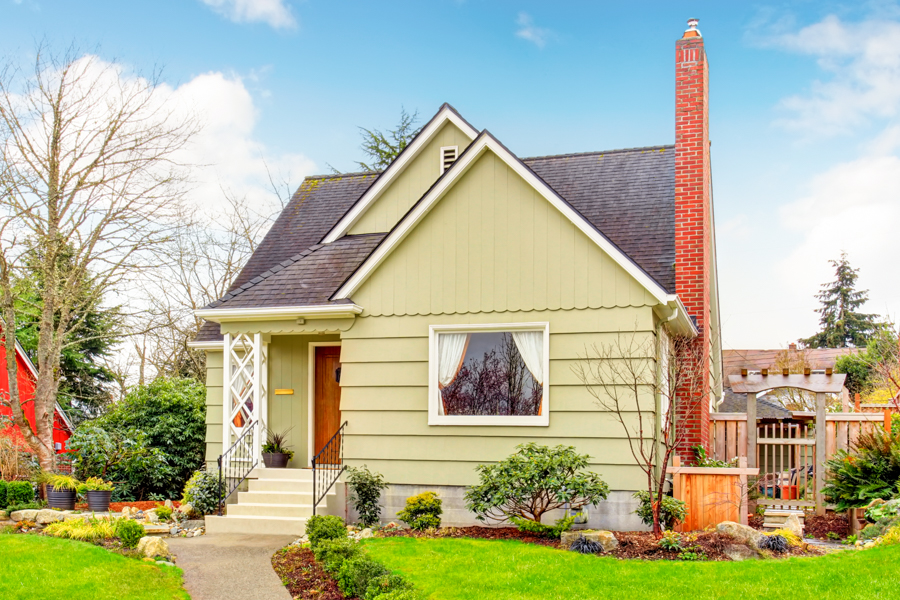
With all the reasons why you should consider buying a home, there are also some good reasons to keep renting. Here are seven pros to renting a home vs buying that may be concerns for you:
You’re not planning to live there for the time it would take to break even
This is usually the single biggest factor in the rent-versus buy decision. As we covered above, buying only pays off once you hit that breakeven point — and where that point lands is dependent on your market and down payment. If your plans are likely to change before that point, renting can be the smarter financial move.
A new job, a growing family, or the pull of a different city can all arrive sooner than expected. When your timeline is short or uncertain, the upfront costs of buying, including down payment, closing costs, and the costs of selling again, are harder to earn back.
Zillow’s Rent vs. Buy calculator can help you estimate how many years it would take for your hypothetical cost of buying to equal your hypothetical cost of renting in your market. Generally, the longer you stay in your home, the more the balance swings toward owning.
Renters usually have more freedom to move
Renting comes with fewer strings attached. Whether it’s a different neighborhood or unit, you can usually move more easily to adapt to your current lifestyle and needs, or try out a different city altogether.
There’s usually no or low maintenance costs
Homeownership can come with unexpected headaches — and sometimes expensive ones. Data based on millions of home projects completed across the country show that home maintenance and upkeep runs about $6,413 annually, according to Thumbtack, a home management platform that enables people to fix, maintain and improve their homes.
You may need to make fewer financial compromises
Coming up with a down payment to buy a home requires building up significant savings, and higher home prices and interest rates have made home-buying an expensive proposition that can require financial sacrifices.
Buying could require you to make compromises that you aren’t ready or able to make, such as settling for one less bedroom when you’re expecting a new member of your family or cutting back on entertainment or vacations.
The upfront costs are likely to be lower
There's a lower financial barrier to entry for renting, so you can invest what you would have spent on a down payment into the stock market or other type of investment.
You skip the risk of falling home values
Homes generally appreciate over time, but they can also lose value. National home values have stayed close to flat over the past year, and some metros, like Austin, Dallas and Tampa, have seen year-over-year declines.
For owners, a price dip is a risk to carry. If you put little or nothing down before building equity, you could end up owing more than your home is worth if you need to sell. As a renter, that downside isn't yours. You can wait out an uncertain market without tying up a down payment in an asset that might lose value.

You don't have to pay property tax and other costs
Aside from maintenance, other costs of ownership include property tax, homeowners insurance and sometimes homeowner association fees.
The financial decision to rent or buy is based on a long timeline, and is anchored on someone’s expectations. Nationally, buying breaks even after about six years, though in some faster-breakeven markets it can happen in roughly 3.5 to 4.2 years.
Where a household falls within that range depends on the cost of the home they’re considering purchasing or renting, how quickly rents and home values grow, the potential rate of return on stocks or other investments and whether mortgage rates fall enough to make refinancing a good option.
If you’re curious about how much rent you can afford, check out our rent affordability calculator. Our Affordability Calculator can show you how much you can afford to spend on a home, given your income, assets and debts. If you've decided to buy, Zillow Home Loans’ BuyAbility℠ tool can help you determine what you can afford, given current interest rates and your financial situation.
Keep in mind that most experts say that shelter is considered affordable if the monthly outlay doesn’t consume more than 30% of your monthly income.
The bottom line: Deciding when to buy a home is a personal choice. There's no one "right" time for everyone. Only you can decide if now is the right time for you.
Need more help understanding when to buy a house? Try our decision tree.
Zillow Home Loans, LLC is an Equal Housing Lender, NMLS #10287
A local agent can help you stay competitive on a budget.
They’ll help you get an edge without stretching your finances.
Talk with a local agentRelated Articles

A local agent can help you stay competitive on a budget.
They’ll help you get an edge without stretching your finances.
Talk with a local agent