Is Seattle a Good Place to Live?

Written by Jennifer Lyons on March 20, 2026
Edited by Suzanne De Vita
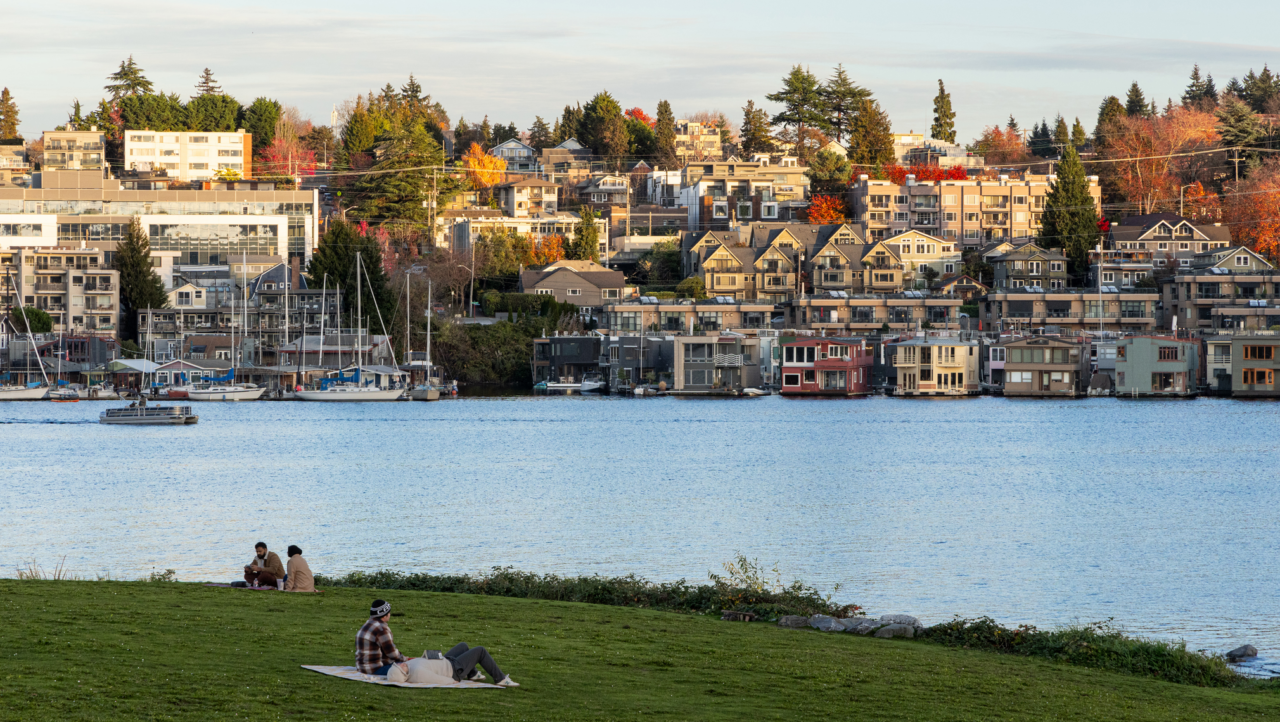
Seattle is a good place to live for those who enjoy a walkable city close to the water with a thriving business industry. Several major employers are headquartered in Seattle like Amazon, Starbucks and Nordstrom, while other major tech industries are located in the neighboring suburbs. Outdoor recreation is within a short drive from The Emerald City, allowing residents to explore the evergreen forests at their leisure. If you're considering a move to Seattle, where you’ll find stunning views of Puget Sound and the Cascade Mountains, here's what to know about the city's unique offerings, weather, job scene and more.
What to consider before moving to Seattle:
- Cost of living
- Job market and economy
- Lifestyle and culture
- Weather and climate
- Commute and public transit
- Pros and cons
- Compared to living in San Francisco
- How to decide
Cost of living
To comfortably afford living in Seattle, the recommended approach is to keep your housing costs less than 30% of your income to avoid being burdened by the cost of your house. This rule of thumb applies whether you plan to rent or buy a home in Seattle.
Renting a home: The monthly cost of rent in Seattle is $2,181, according to the February 2026 Zillow’s Observed Rent Index. You’d need an annual income of $87,251 to afford to rent in Seattle and remain within the 30% threshold — 15% higher than the annual income needed to afford the typical U.S. rent.
Buying a home: The average home value in Seattle is $740,211 as of February 2026, according to the Zillow Home Value Index. With a 20% down payment, the monthly mortgage payment on the average home in Seattle is $3,568. To afford the payments and stay within the 30% threshold, you’d need an annual income of $183,039. That’s 96% higher than the income needed to afford the typical U.S. home.
When deciding if a home in Seattle will be affordable for you, weigh the cost of living with your additional monthly expenses like utilities on an apartment. The total monthly payment for owning a home in Seattle when you include the mortgage, insurance costs, property taxes, and maintenance costs is $4,576. Use Zillow’s Rent vs Buy Calculator to estimate whether buying a home in Seattle or renting works best based on your financial situation.
| Seattle | National | How Seattle compares | |
| Typical mortgage payment | $3,568 | $1,738 | 96% higher income needed |
| Average monthly rent | $2,181 | $1,895 | 15% higher income needed |
Data source: All housing costs metrics are based on Zillow Research data using Zillow’s Affordability Metrics.
Job market and economy
Seattle is best known for tech sector jobs — Amazon, Microsoft and T-Mobile are all based in the area. Because of the wealth of tech talent in the city, you’ll also find satellite offices for Google, Meta, Apple, Oracle and others, plus plenty of startups and AI companies looking to grab their piece of the pie. The job industry in Seattle can be quite competitive, and it is not uncommon for companies to restructure or reduce workforce as businesses reassess their goals.
Of course, tech isn’t the only game in town. Seattle is also known for its aerospace, healthcare, tourism, transportation logistics and education industries.
- Income: The typical household income in Seattle is $118,181 as of February 2026, according to Zillow Research.
- Common professions: Business and financial operations, computers and mathematics, office and administrative support, food service and transportation jobs are the most common in Seattle, according to BLS.
- Job growth: As of late 2025, the Seattle job market is cooling somewhat. Large tech sector layoffs throughout 2025 have led to an increasing unemployment rate.
Lifestyle and culture
As the most populous city in the Pacific Northwest, Seattle has a lot to offer. Whether you’re a Sunday farmers market-and-brunch type, a live music lover or an outdoor adventurer, the Emerald City is bursting with year-round opportunities for exploration and enrichment.
- Outdoor activities: Seattle’s backdrop includes the Cascade and Olympic mountain ranges, which offer opportunities for snowsports, hiking and camping. Then there’s Puget Sound, Lake Union and Lake Washington for all things water, from boating and fishing to jetskiing.
- Music and arts: Seattle is the birthplace of grunge music, but the arts scene goes far beyond one musical genre. The city is bursting with local music venues, public art installations and museums, including the Seattle Art Museum and MoPOP.
- Local food: Seattle’s food scene is deeply tied to its geography — think fresh seafood, seasonal produce and foraged mushrooms and herbs. There are Asian American and Pacific Islander influences everywhere, including Japanese, Vietnamese, Filipino, Korean and Chinese restaurants. Seattle-style teriyaki, mostly offered at small, family-run restaurants, is a must-try.
- Coffee and cafes: No exploration of Seattle is complete without talking about coffee. Not only is Seattle the home of Starbucks, but also hundreds of local roasters which serve as gathering places, workplaces and social hubs.
- Professional sports: Seattle is a city of devoted, rain-or-shine sports fans. The Seattle Seahawks’ Lumen Field is known as one of the loudest stadiums in the NFL. Seattle’s sports venues are located right in the heart of the city, making it easy for fans to enjoy everything from the Seattle Sounders and Seattle Reign soccer teams, to the Seattle Mariners baseball team and the NHL’s Kraken.
Explore more region insights about Seattle.
Weather and climate
Seattle experiences about 150 rainy days per year, most precipitation falls in the form of a steady drizzle, with gray overcast skies. While the gray can be a downside for many, patient Seattleites are rewarded with an overall mild climate and warm, sunny summers.
- Warm summers: Seattle summers are famously comfortable and long. Average daily highs are around 71 degrees Fahrenheit. Around June’s summer solstice, the sun doesn’t set until after 9 p.m., with twilight stretching until almost 10 p.m.
- Wet winters: Winters are more damp than cold, with a seasonal average of 43 degrees Fahrenheit, according to NOAA. Short days, called “the Big Dark” by locals, can make the winter feel long and gloomy, especially for those prone to Seasonal Affective Disorder (SAD).
- Low extreme weather risk: Seattle faces a relatively low risk of severe weather — you won’t find hurricanes, tornadoes or significant snowfall here. Earthquakes are a risk, and seasonal wildfires can be an issue.
- Occasional wildfire smoke: In general, Seattle’s air quality is good. In late summer and early fall, Seattle is sometimes impacted by wildfire smoke from fires across Washington, Oregon and British Columbia — affecting air quality.
Connect with a local real estate agent in Seattle to learn more about the area.
Commute and public transit
Seattle’s hilly landscape, waterfront location and multiple in-city lakes can make transportation a challenge. When you factor in Seattle’s growing population, it’s best to pack your patience, especially during peak commute times.
- Best way to get around: The best way to get around Seattle, especially the entire metro area, is by car. While public transit is improving with expansions in light rail and bus service, coverage isn't as comprehensive as cities like New York or Chicago. Biking is a great option as the city continues to invest in protected bike lanes.
- Average commute time: According to Census data, 69.2% of Seattle area workers age 16 and older commute by car, truck or van, with an average commute time of 30 minutes. Over 21% report a commute that takes more than 45 minutes.
- Traffic conditions: Traffic is manageable outside of rush hour, and there can be delays when road closures or summer road construction projects happen.
- Road conditions: The major roads in Seattle are in pretty good shape, but rain, hills and older infrastructure mean that potholes can be unfortunately common. Seattle has committed to filling most potholes within 72 hours.
- Rideshare availability: It’s easy to snag rideshare services like Uber and Lyft in Seattle, as well as shared e-scooters for short trips around town.
- Public transit availability: Seattle has an extensive public bus network and a growing light rail system that connects downtown to the airport, serves the central core and is expanding to some popular suburbs.
- Walkability: If you live in Seattle proper and aren’t afraid of a few hills and occasional raindrops, Seattle is pretty walkable — WalkScore gives it a 74 out of 100 rating. Capitol Hill, Belltown and South Lake Union are exceptionally walkable.
Pros and cons of living in Seattle
There’s so much to love about living in Seattle, but no city is perfect. Let’s break down the benefits and drawbacks about life in Washington State’s biggest city.
Pros
- Breathtaking natural surroundings: Seattle is at the heart of some of the most beautiful Pacific Northwest landscapes, and getting outdoors and exploring is part of daily life for many Seattleites. Weekends can be spent hiking trails like Mailbox Peak, skiing at Crystal Mountain, or enjoying panoramic views from Mount Rainier National Park. Ferry rides to nearby islands — such as Bainbridge, Vashon, and the San Juans — are commutes for some, and fun getaways for others.
- Legendary music: Seattle’s music scene is best known as the birthplace to grunge bands Nirvana, Pearl Jam and Soundgarden, and today, venues like The Crocodile and The Showbox still pulse with new talent. The city also plays host to several popular music festivals, like the Capitol Hill Block Party and Bumbershoot.
- Food lover’s dream: Seattle’s culinary scene is as innovative as it is diverse. Fresh seafood is easily found and savored, whether you crave wild salmon, Dungeness crab, briny oysters, or the uniquely delicious geoduck (a giant, sweet clam often served sashimi-style). For more casual fare, try a classic Seattle Dog, a hot dog topped with cream cheese and grilled onions.
- Focus on sustainability: The city and its residents have adopted many environmentally-friendly initiatives over the years, including widespread recycling, energy-efficient buildings and electric vehicle charging stations.
- Overall mild climate: If you can tolerate the wet and gray winters, Seattle offers a much milder climate than other major cities. With a few rare exceptions, you won’t experience major cold snaps, super hot summer days or high humidity.
- No state income tax: Washington state doesn’t have a state income tax, helping your dollars go farther in an expensive housing market.
Cons
- High housing costs: Seattle’s home prices are among the highest in the U.S. The median list price in Seattle is $705,917 as of February 2026, while the average monthly rent is $2,181.
- Traffic struggles: An award nobody wants, Seattle consistently ranks among the most congested cities for traffic in the U.S.
- The “Seattle Freeze”: The so-called “Seattle Freeze” refers to locals being polite but somewhat reserved — or even downright unfriendly — when meeting new people. For newcomers, this can feel like a barrier to building a social circle, at least initially.
- High sales tax: While Washington doesn’t have a state income tax, Seattle’s sales tax is pretty high. The 10.55% combined rate (a combination of state and local tax rates) can make everything from dining, entertainment and home furnishings add up pretty quickly.
- Limited late-night scene: Compared to Chicago or New York, Seattle is relatively quiet at night for a large city, with fewer late-night dining and entertainment venues.
Is Seattle better than San Francisco?
Seattle and San Francisco are often compared, and for good reason. They’re both West Coast, tech-driven, progressive cities with a penchant for outdoor adventure. If you’re trying to decide between living in Seattle or San Francisco, here are a few things to consider.
- Cost of living: Monthly rent in Seattle is $2,181, on average, while rent in San Francisco averages $3,103— 42% higher than rent prices in Seattle. In Seattle, homeowners can expect to pay an average of $4,576 per month on a mortgage, including things like insurance, property taxes and maintenance costs. San Francisco is quite a bit more expensive, with average total monthly home payments at $6,845 — almost 50% higher than Seattle.
- Job market and economy: Both Seattle and San Francisco are leaders in the tech industry, but Seattle’s job market is more centralized around large employers, while San Francisco has a strong startup culture. Both cities have a strong tourism sector, meaning a lot of locals are employed in tourism and hospitality.
- Lifestyle and culture: Despite having similar population sizes, San Francisco is more densely populated and has a more traditionally urban lifestyle. Seattle is a bit quieter, with more single-family homes within the city limits.
- Schools and higher education: Both cities have a wide range of educational options. GreatSchools rates 64% of schools in the Seattle Public Schools district as above average for quality. In the San Francisco Unified School District, 42% of schools rate above average for quality. In terms of higher education, Seattle is home to the University of Washington, while San Francisco’s collegiate scene includes Stanford and UC Berkeley.
- Weather and climate: Both Seattle and San Francisco have generally mild climates. Seattle sees warm, long summer days and rainy winters, while San Francisco has cooler, sunnier summers than Seattle, but frequent fog throughout the year.
- Commute and public transit: It’s more feasible to live car-free in San Francisco thanks to its comprehensive public transit system. While Seattle’s transit system is improving, many residents still have cars, especially those living in the suburbs.
How to decide if living in Seattle is right for you
Whether you're drawn to Seattle’s stunning landscapes, job market or rich coffee and music culture, the city has a way of capturing hearts. Yet like any city, it has its drawbacks. If you’re considering a move to Seattle, here are a few helpful tips:
- Prioritize your needs: Seattle could appeal to you if you’re looking for an active lifestyle, plenty of arts and culture and milder weather.
- Compare cost of living: Your housing expense makes up the majority of your cost of living in Seattle. To keep your monthly house payment less than 30% of your income, you’ll need an annual income of at least $87,304 to comfortably afford rent in Seattle and $181,931 to buy a home with a 20% down payment.
- Research neighborhoods: Your Seattle experience is highly tied to the neighborhood you choose. From dynamic, walkable Capitol Hill to luxurious Laurelhurst to family-friendly Ballard, there’s a neighborhood here for every need and preference.
- Explore homes for sale: You can find homes for sale in Seattle on Zillow and narrow down your options by number of bedrooms, square footage, new construction and more.
How much home can you afford?
At Zillow Home Loans, we can pre-qualify you in as little as 5 minutes, with no impact to your credit score.
Zillow Home Loans, NMLS # 10287. Equal Housing Lender
Get pre-qualifiedA great agent makes all the difference
A local agent has the inside scoop on your market and can guide you through the buying process from start to finish.
Learn moreRelated Articles


Download the Zillow App
Don’t miss out on the right home for you — browse up-to-date listings, refine your search and more.
Download the free app